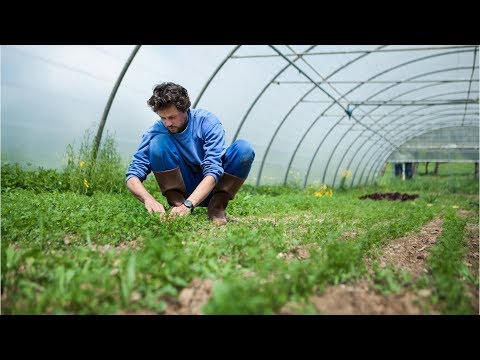
Photo: USDAgov (Public domain)
Job description
In support of that research, technicians run tests and experiments aimed at improving crop yield and quality or boosting disease and pest resistance, setting up and maintaining lab equipment and collecting samples from crops or animals along the way. The job isn't purely a lab role: it also involves fieldwork like operating tractors and other farm machinery and preparing land for planting. Because much of the work happens outdoors around machinery and contaminants, protective gear like gloves and safety glasses is standard.
Pros
- Faster than average projected job growth (4.3% over the next decade)
- Enters via vocational training, apprenticeship, or an associate's degree, no four-year degree required
- Hands-on outdoor work with machinery, crops, and animals suits people who don't want a desk job
Cons
- A relatively small number of positions nationwide, so opportunities may be geographically limited
- Entirely outdoor work means direct exposure to whatever the weather is doing, in every season
- Pay tops out under $77k despite the physical demands and equipment-safety risks involved
A typical day
Lab coat on by 8am to process yesterday's soil samples — weighing, labeling, running nutrient analyses, and entering results into the database with the care of someone whose numbers feed real recommendations. Late morning moves outdoors: collecting leaf-tissue samples from test plots on a precise grid, recording GPS coordinates and growth-stage notes. The afternoon might be spent maintaining instruments, calibrating a spectrometer, or setting up a germination trial with hundreds of labeled trays. It's methodical work where a mislabeled sample can quietly ruin a season's experiment, so the discipline is the skill.
Tasks at the job
- Prepare land for cultivated crops, orchards, or vineyards by plowing, discing, leveling, or contouring.
- Operate farm machinery, including tractors, plows, mowers, combines, balers, sprayers, earthmoving equipment, or trucks.
- Record data pertaining to experimentation, research, or animal care.
- Maintain or repair agricultural facilities, equipment, or tools to ensure operational readiness, safety, and cleanliness.
- Collect animal or crop samples.
- Examine animals or crop specimens to determine the presence of diseases or other problems.
Workplace & working conditions
Work happens primarily outdoors, exposed to whatever the weather is doing. Noise levels can be distracting or uncomfortable. The role involves regular exposure to hazardous equipment or conditions and contaminants, and standard protective equipment (gloves, safety glasses, and similar) is expected.
Education necessary or common
Vocational training, apprenticeship, or associate's degree
Common college majors
Licenses & certifications
- Pesticide applicator license (some roles)
- OSHA lab safety training (helpful)
Career path
Related fields
Courses to take
- AP Biology — the daily subject matter
- Chemistry — lab technique and analysis methods
- AP Statistics — experimental data is the product
- Agriscience if offered
- Computer Applications — data entry and instrument software
Clubs, activities & competitions
- FFA agriscience fair
- 4-H science projects
- Science Olympiad lab events
- Volunteer or part-time work at a greenhouse, nursery, or extension office
First steps you can take now
- Ask your county extension office about student volunteering or job-shadowing a technician
- Run a soil test on your yard or a garden using a mail-in kit from your state's extension lab and interpret the report
- Keep a real lab notebook for any science class experiments this month — the habit is the credential
- Look up crop-science technician programs at nearby community colleges