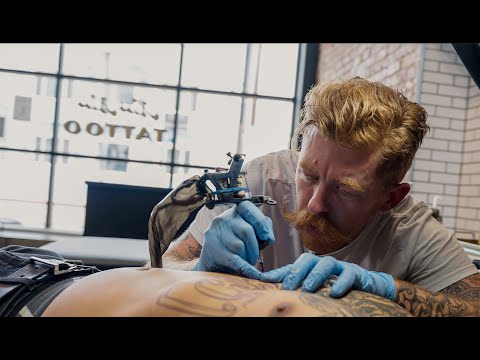
Photo: Technopop.tattoo (CC BY-SA 4.0)
Job description
Consults with clients on design, size, and placement, draws or adapts custom artwork, and performs the tattoo itself using a tattoo machine, often holding a fixed position for hours at a stretch. Reputation and a strong portfolio drive demand for a given artist, and income is typically a mix of hourly or per-piece rates plus tips. Strict sanitation protocols are non-negotiable given the infection risk, and building quick rapport with each new client is part of getting a tattoo right.
Pros
- High upside earning potential, up to $120k, built directly on reputation and a strong portfolio
- Creative, hands-on craft work translating clients' ideas into permanent custom art
- No four-year degree required, though a state-mandated apprenticeship builds real technical skill
Cons
- Above-average hours, expect more than a standard 40-hour work week
- Sustained fine-motor precision over sessions that can run for hours without a break is physically taxing
- Strict sanitation standards are non-negotiable given the real risk of infection
A typical day
The day starts before the first client: stations disinfected, needles and inks staged in sealed singles, and the 1pm appointment's custom design getting final linework on the iPad. The first session is a three-hour half-sleeve continuation -- stencil placed, checked in the mirror, adjusted, then hours of focused machine work with breaks watched for the client's sake. Between sessions, the artist answers booking messages and reworks a sketch a client wants softened. The last appointment ends with aftercare instructions delivered like the medical advice they are, and the night closes with drawing for next week.
Tasks at the job
- Consult with clients to design custom artwork based on their ideas and placement.
- Prepare skin, equipment, and inks following strict sanitation protocols.
- Apply tattoos using a tattoo machine, working in a fixed position for extended periods.
- Sketch or trace stencils before beginning permanent work.
- Provide aftercare instructions to clients once a tattoo is finished.
- Maintain a portfolio and social media presence to attract new clients.
Workplace & working conditions
Work happens indoors in a tattoo studio, at a station equipped for sanitation and close, prolonged physical contact with clients.
The work demands sustained fine-motor precision over sessions that can run for hours without a break, and strict sanitation standards are non-negotiable given the risk of infection. Building rapport quickly with each new client is part of getting a tattoo right.
Education necessary or common
No formal degree required; a state-mandated apprenticeship under a licensed tattoo artist, often 1-2 years, is the standard path
Licenses & certifications
- State tattoo license (varies by state)
- Bloodborne pathogens certification
- CPR/First Aid
Career path
Related fields
Courses to take
- Art and AP Art & Design -- drawing skill is the entire foundation
- Anatomy -- skin, muscle, and how bodies curve under a design
- Biology -- bloodborne pathogens and healing are safety-critical knowledge
- Business math -- most artists run their own books
- Digital art or graphic design electives
Clubs, activities & competitions
- Build a serious sketchbook habit -- daily drawing, especially linework
- Art club and National Art Honor Society
- Design flyers, shirts, or logos for school groups -- commissions in miniature
- Enter art competitions and shows
First steps you can take now
- Fill a sketchbook with clean linework studies -- roses, script, traditional flash
- Get a bloodborne pathogens certificate online -- cheap, fast, and shows seriousness
- Build a portfolio of 20 finished drawings before ever approaching a shop
- Research your state's apprenticeship and licensing rules -- they vary widely