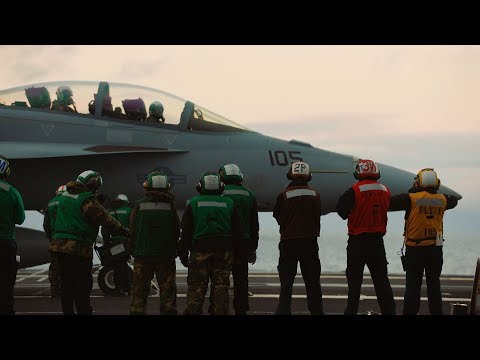
Photo: U.S. Naval Forces Central Command/U.S. Fifth Fleet (CC BY 2.0)
Job description
Specialists inspect and test launch and recovery equipment before flight operations begin, then direct aircraft on deck using hand and light signals during actual launches and recoveries. If something goes wrong on landing, they're the ones who activate emergency arresting systems like barriers or cables, and they also install and maintain the visual landing aids that guide pilots on approach. The flight deck is loud, fast-moving, and genuinely dangerous, with jet engines, moving aircraft, and cables under high tension, so the work demands constant vigilance and split-second coordination with pilots and other crew.
Pros
- Hands-on technical work maintaining and operating high-value catapult and arresting-gear systems
- Close, high-trust coordination with pilots and deck crew builds strong teamwork skills
- Central, mission-critical role in every carrier launch and recovery operation
Cons
- Loud, fast-moving flight-deck environment with jet engines and high-tension cables poses real hazards
- Virtually no margin for error given the equipment and aircraft involved
- Above-average hours and constant vigilance required during flight operations
A typical day
Flight quarters sound and the deck crew mans up in float coats and cranials. The specialist's morning might be spent inspecting arresting-gear engines below deck — hydraulic fluid levels, cable condition, sheave alignment — because the wire that stops a 20-ton jet gets no bad days. Topside during the launch cycle, they hook aircraft to the catapult shuttle, check holdback fittings, and clear the shot line with practiced hand signals in a world too loud for words. Between cycles: greasing, testing, and retesting equipment. It's dangerous, precise, physical work with a crew that trusts each other completely.
Tasks at the job
- Operate and maintain catapults and arresting-gear systems used to launch and recover aircraft.
- Direct aircraft on the flight deck using hand and light signals during launch and recovery.
- Inspect and test launch and recovery equipment before flight operations begin.
- Install and maintain visual landing aids used to guide pilots during approach.
- Activate emergency arresting systems, such as barriers or cables, during abnormal landings.
- Maintain logs of launches, recoveries, and equipment maintenance performed.
Workplace & working conditions
Work happens on an aircraft carrier's flight deck, a loud, fast-moving, and hazardous environment with jet engines, moving aircraft, and cables under high tension, requiring hearing protection and close coordination with pilots and other deck crew.
The pace is intense and time-critical during flight operations, with launches and recoveries happening in rapid succession and virtually no margin for error given the equipment and aircraft involved. The role demands constant vigilance and split-second communication with pilots and fellow crew in a physically dangerous setting.
Education necessary or common
—
Licenses & certifications
- ASVAB qualification and Navy 'A' school training (earned in service)
Career path
Courses to take
- Shop / Mechanical courses — hydraulics and heavy equipment aptitude
- Physics — tension, pressure, and momentum are the working materials
- Algebra
- PE / fitness — the flight deck is an athletic environment
Clubs, activities & competitions
- Naval Sea Cadets or JROTC
- SkillsUSA
- Any hands-on mechanical hobby: engines, bikes, mowers
- Team sports — nonverbal coordination under noise and pressure is literal job training
First steps you can take now
- Meet a Navy recruiter and ask about the Aviation Boatswain's Mate (ABE) rating specifically
- Study ASVAB mechanical-comprehension sections with free practice tests
- Watch carrier flight-deck footage and learn what each crew signal means
- Strengthen a maintenance habit: keep one machine in your life perfectly serviced and logged