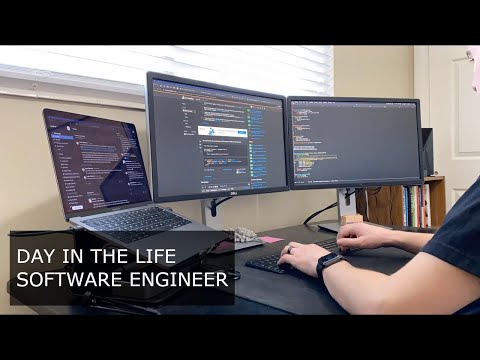
Photo: Joonspoon (CC BY-SA 4.0)
Job description
The work covers writing, testing, and debugging code, designing the architecture and data structures behind new features, and reviewing teammates' code to make shared technical decisions. Developers also fix bugs and respond to production issues when something breaks, and often collaborate with hardware engineers to integrate software with physical systems. Deadlines create real pressure, especially near a release, but day-to-day work leaves a lot of room for independent judgment on how to solve a given problem.
Pros
- Strong pay from entry level onward, with a ceiling above $214k
- Much faster than average growth (15.8%) and by far the largest demand pool in tech (115,200 jobs)
- Significant independent judgment in how to solve problems, with generally flexible work arrangements
Cons
- Above-average hours, especially around releases or urgent production issues
- Production issues can require dropping everything to fix something that's actively broken
- Constant need to learn new languages, frameworks, and tools as technology shifts
A typical day
The day opens with standup at 9:15 -- two minutes on what shipped yesterday and what's blocking today. Most of the morning is heads-down in the editor, building an API endpoint and writing the tests that prove it works. After lunch there's a code review to give, a design discussion about how a new feature should handle errors, and a bug report from support that turns out to be a one-line fix hiding behind a misleading stack trace. The last hour goes to cleaning up the branch and opening a pull request so a teammate can review it overnight.
Tasks at the job
- Write, test, and debug code to build or maintain software applications.
- Design system architecture and data structures for new features.
- Review other developers' code and collaborate on technical decisions.
- Fix bugs and respond to production issues when software breaks.
- Translate product or business requirements into working technical specifications.
- Document code and systems so others can maintain or extend the work.
Workplace & working conditions
Work happens indoors at a computer, in an office or remote setup, with long focused stretches of coding interspersed with meetings.
Deadlines create real pressure, especially near a release or when production issues need urgent fixes, but day-to-day work allows significant independent judgment on how to solve a problem. Precision matters, since bugs can be costly, but the work is generally more flexible and less rigidly structured than in many other fields.
Education necessary or common
Bachelor's degree
Common college majors
Career path
Related fields
Courses to take
- AP Computer Science A -- real programming in Java, the closest thing to the job itself
- AP Computer Science Principles -- broader intro if CSA feels like a leap
- AP Calculus AB/BC -- required by nearly every CS degree program
- AP Statistics -- data and probability show up everywhere in software
- Physics -- practice modeling systems precisely
Clubs, activities & competitions
- FIRST Robotics or VEX -- programming under deadline pressure with a team
- Competitive programming (USACO, local hackathons) -- sharpens problem-solving fast
- Computer science or coding club -- or found one
- Build and publish personal projects -- a GitHub profile is a portfolio
First steps you can take now
- Build one small project this month -- a game, a website, a bot -- and finish it
- Work through a free course like CS50 or freeCodeCamp
- Put your code on GitHub and learn basic version control
- Find a local hackathon or online game jam and enter it