Photo: Ank Kumar (CC BY-SA 4.0)
Job description
Managers research industries and asset classes, select or adjust the fund's specific investments, and continuously monitor those holdings, either executing trades themselves or directing traders as market conditions shift. It's a fast-paced, structured, desk-based role where independent judgment drives every call. Career paths typically start as a research analyst covering one narrow sector, then advance toward managing a slice of a fund and eventually an entire fund or team, often supported by an MBA or CFA charter, with pay climbing well into six figures as fund size and responsibility grow.
Pros
- Much faster than average projected job growth (14.8% over the next decade)
- Strong pay even at entry level, topping out at $323k
- Direct accountability for investment performance offers a clear, measurable track record
Cons
- Above-average hours, expect more than a standard 40-hour week
- Fast pace with constant deadline and market pressure on every trading day
- An MBA or CFA charter is common in practice even though not strictly required to enter
A typical day
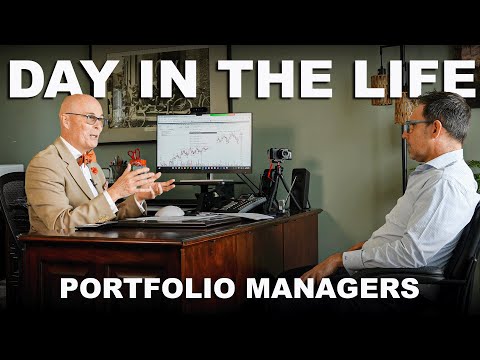
The pre-market hour is reading: earnings out of two portfolio companies, a Fed governor's overnight speech, and the analyst team's notes on both. The 8:45 investment meeting is the day's engine — an analyst pitches adding an industrial stock, and the manager's job is disciplined skepticism: what does the market misunderstand, what breaks the thesis, what's the position size if we're wrong? Late morning brings portfolio review against the fund's mandate — risk exposures, sector weights, and the tracking numbers that answer to the fund's investors. The afternoon holds a management call with a company the fund owns (listening for what isn't said), a rebalancing decision executed with the trading desk, and a quarterly letter draft explaining performance in language that respects clients' intelligence. Markets close at 4; the reading never does.
Tasks at the job
- Manage investment funds to maximize return on client investments.
- Select specific investments or investment mixes for purchase by an investment fund.
- Monitor financial or operational performance of individual investments to ensure portfolios meet risk goals.
- Select or direct the execution of trades.
- Develop or implement fund investment policies or strategies.
- Perform or evaluate research, such as detailed company or industry analyses, to inform financial forecasting, decision making, or valuation.
Workplace & working conditions
Work happens indoors in a climate-controlled setting, and most of the day is spent sitting at a desk.
The pace is often fast, with real time pressure to meet deadlines, and you're expected to exercise significant independent judgment day to day. The work is highly structured, following set procedures.
Education necessary or common
Bachelor's degree required; an MBA and/or CFA charter is common but not strictly required
Common college majors
Licenses & certifications
- CFA charter — the profession's defining credential
- Series 65/7 depending on structure
- CAIA for alternative investments
- MBA common at senior levels
Career path
Related fields
Courses to take
- AP Statistics — portfolio thinking is probability discipline
- AP Calculus — the quantitative foundation
- AP Economics — markets, cycles, and policy
- AP English Language — investment letters are persuasion with accountability
- Accounting if offered — financial statements are the raw material
- AP Computer Science — quantitative analysis increasingly runs on code
Clubs, activities & competitions
- Investment club — manage a paper portfolio with written buy/sell rationales
- Wharton Global Investment Competition or the Stock Market Game
- Math team — comfort with numbers under time pressure
- DECA/FBLA finance events
- Read annual reports as a hobby — genuinely, this is the practice
First steps you can take now
- Pick three public companies, write a one-page thesis on each, and grade yourself in six months
- Read one shareholder letter from a great investor (Buffett's archive is free)
- Learn what an index fund is and why beating one is hard — the field's honest benchmark
- Interview a financial advisor or analyst about how professional investing differs from trading apps