Photo: Marcy Sanchez (Public domain)
Job description
Social workers advocate for patients navigating a health crisis, walk families through difficult decisions like end-of-life care, and refer people to outside resources such as financial assistance, housing, or legal aid. They also collaborate closely with doctors and other clinicians to understand a patient's medical situation and coordinate a care plan around it, tracking progress against specific goals over time. The pace is often fast and emotionally demanding, since the job means regularly supporting people who are frightened, grieving, or overwhelmed, and it requires a Master of Social Work plus state licensure to practice.
Pros
- Faster than average projected job growth (7.7%), well above most healthcare support roles
- Broad demand with 18,400 positions nationwide across hospitals and care settings
- Directly supports patients and families through some of their most difficult health moments
Cons
- Requires a Master of Social Work plus state licensure before practicing independently
- Fast-paced work handling crises and coordinating care under real time pressure
- Regularly deals with frustrated or emotionally distressed patients and family members
A typical day
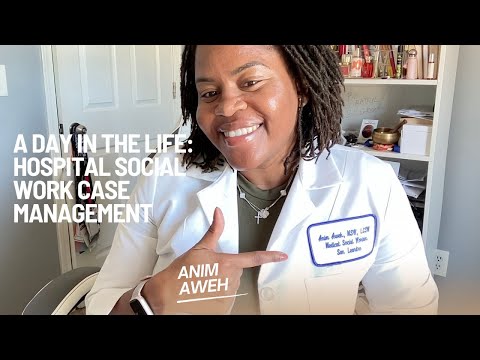
Rounds start at 8am with the medical team, flagging which patients will need more than medicine — the stroke survivor whose house has stairs, the new cancer diagnosis whose family hasn't absorbed it yet. Mid-morning is spent at bedsides: one conversation helping a frightened spouse understand hospice, another connecting an uninsured patient to medication assistance programs. The afternoon is logistics with weight — arranging a skilled nursing facility placement, a family meeting where the social worker translates between physicians and grief, and phone calls to community agencies. Documentation stretches to day's end, because every safe discharge plan has to be written down to count.
Tasks at the job
- Advocate for clients or patients to resolve crises.
- Educate clients about end-of-life symptoms and options to assist them in making informed decisions.
- Collaborate with other professionals to evaluate patients' medical or physical condition and to assess client needs.
- Refer patient, client, or family to community resources to assist in recovery from mental or physical illness and to provide access to services such as financial assistance, legal aid, housing, job placement or education.
- Utilize consultation data and social work experience to plan and coordinate client or patient care and rehabilitation, following through to ensure service efficacy.
- Monitor, evaluate, and record client progress according to measurable goals described in treatment and care plan.
Workplace & working conditions
Work happens indoors in a climate-controlled setting, and you work in close physical proximity to coworkers or the public for much of the shift.
The pace is often fast, with real time pressure to meet deadlines, and you're expected to exercise significant independent judgment day to day. The work is highly structured, following set procedures. You'll regularly deal with frustrated or upset people as part of the job, and almost all of the work is done as part of a team.
Education necessary or common
Master of Social Work (MSW), plus state licensure
Common college majors
Licenses & certifications
- State social work licensure (LMSW, then LCSW for clinical practice)
- Certified Hospice and Palliative Social Worker (CHP-SW) — optional specialty credential
- BLS/CPR certification
Career path
Related fields
Courses to take
- AP Psychology — the closest high school gets to the heart of this work
- Sociology (if offered) — systems, families, and inequality in context
- Health or Anatomy — you'll work inside medical teams and need their language
- AP English Language — case notes and advocacy both run on clear writing
- Spanish or another world language — expands who you can serve
- AP Statistics — research literacy for evidence-based practice
Clubs, activities & competitions
- HOSA — health careers exposure with a service orientation
- Peer counseling or peer mediation program
- Volunteer with a hospice, hospital, or senior center — direct contact with people in hard moments
- Crisis text line or community helpline volunteering (where age rules allow)
First steps you can take now
- Volunteer weekly somewhere people face illness or aging — a nursing home is a great start
- Interview a hospital social worker about a typical caseload
- Read about the MSW degree and what state clinical licensure (LCSW) requires
- Practice active listening deliberately for a month — summarize back what people say before responding