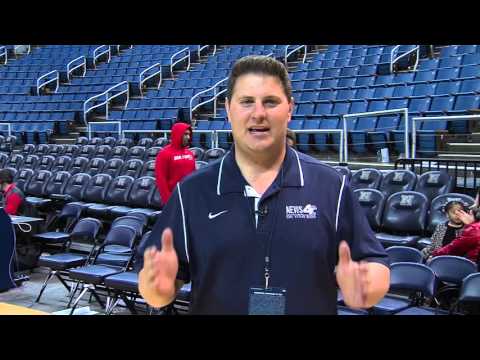
Photo: Bobak Ha'Eri (CC BY 3.0)
Job description
Preparation means reviewing film and statistics ahead of time to build analytical talking points, but the actual delivery is live and unscripted: reacting to plays as they unfold and providing color commentary alongside a play-by-play announcer. Commentators also take part in pre- and post-game studio panels, working collaboratively with co-hosts rather than delivering solo takes. Many draw on personal experience as a former athlete or coach to lend credibility to their analysis, and the job typically involves travel to cover games or events at different venues.
Pros
- High earning ceiling (up to $300k) for well-established commentators
- Draws on real sports expertise, often building on a background as an athlete or coach
- Collaborative, panel-based format rather than solo, isolated work
Cons
- Live, unscripted format means no chance to revise a take after it airs
- Requires travel to cover games or events at different venues
- Career path often depends on an athletic or coaching background not everyone has
A typical day
The morning is film -- three hours of all-22 footage, clipping plays that prove the point tonight's segment will make about a struggling offensive line. Midday brings a production call where producers pitch topics and the commentator pushes back on a take that the tape doesn't support. Hair and makeup at 4, then a studio show where the real skill is compressing an hour of film study into 40 lucid seconds when the host throws it your way. After the show, social clips get reviewed and tomorrow's games get flagged for recording, because the pipeline of informed opinions never empties.
Tasks at the job
- Review game film and statistics to prepare analytical talking points.
- Provide color commentary alongside the play-by-play announcer during broadcasts.
- Break down strategy and player performance in real time.
- Participate in pre-game and post-game studio panel discussions.
- React spontaneously to unfolding plays without a prepared script.
- Travel to cover games or events at different venues.
Workplace & working conditions
Work happens in a broadcast booth or studio panel setting, often alongside other commentators and anchors.
The pace demands quick, unscripted analysis delivered live, with no chance to revise a take after it airs. The role is collaborative by nature, built around back-and-forth with co-commentators rather than solo delivery.
Education necessary or common
Bachelor's degree in broadcasting, journalism, or communications; often built on a background as a former athlete or coach
Common college majors
Career path
Related fields
Courses to take
- AP English Language -- argument, evidence, and concision on camera
- AP Statistics -- modern analysis is quantitative or it's noise
- Journalism electives -- sourcing and media ethics
- Public speaking or debate -- defending a take under fire
- Film/media production -- understanding what makes TV work
Clubs, activities & competitions
- Play a sport seriously -- analysis credibility usually starts on the field
- Debate team -- structured hot-take defense
- Start an analysis podcast or YouTube breakdown channel
- Write game analysis for the school paper
First steps you can take now
- Break down one game's film and post a written or video analysis
- Learn to use free clipping tools to build highlight arguments
- Study one great analyst and map how they structure a 60-second answer
- Get reps talking sports on camera weekly, even to no audience