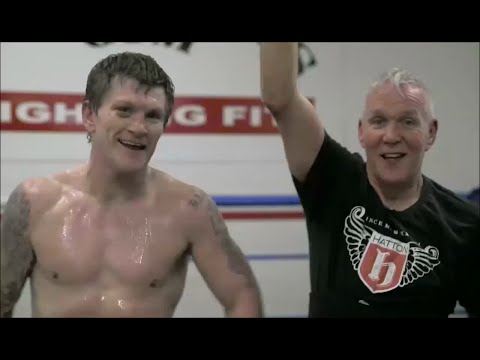
Photo: Dudley Council from England (CC BY 2.0)
Job description
A trainer designs and leads training sessions built around technique, conditioning, and sparring, often holding focus mitts and pads personally to drill a boxer's combinations and defense. Before a fight, the trainer studies an opponent's tendencies to build a specific game plan, then works the corner on fight night, giving instructions and treating cuts between rounds as the bout unfolds. Monitoring a boxer's health, weight, and recovery day to day is just as important as the technical coaching, since fatigue or injury can change a training plan on short notice. Most income comes from gym coaching and personal training, with a cut of a fighter's purse reserved for those training active competitors.
Pros
- No formal degree required, credibility built through personal boxing background and results
- High upside earning potential, up to $100k for trainers of successful competitive fighters
- Hands-on, relationship-driven work developing a fighter's skill over time
Cons
- Entry-level pay can be quite low, especially before working with active competitive boxers
- Above-average hours -- expect more than a standard 40-hour work week
- Corner decisions during fights carry real responsibility for a boxer's safety mid-bout
A typical day
The gym opens at 6 for the pros: this morning is pad work with a welterweight eight weeks from a fight, the trainer's mitts calling combinations while his eyes audit balance, defense, and the bad habit of dropping the right hand that they've been rebuilding for a month. Between rounds come corrections delivered in ten words or fewer — coaching is editing. Midday holds the business: sparring arranged with the right styles, a call with a matchmaker, tape watched of the opponent whose jab will define the camp's game plan. The evening classes pay the rent — beginners and teens on the heavy bags, taught fundamentals with the same seriousness as the pros, because stance is stance. Fight night, weeks away, will compress everything into sixty seconds of corner advice between rounds that must be exactly right.
Tasks at the job
- Design and lead training sessions covering technique, conditioning, and sparring.
- Hold focus mitts and pads to drill a boxer's punching combinations and defense.
- Develop fight strategy based on an opponent's tendencies and a boxer's strengths.
- Work the corner during bouts, giving instructions and treating cuts between rounds.
- Monitor a boxer's health, weight, and recovery to guide training intensity.
Workplace & working conditions
Work happens mostly in a gym around a boxing ring and heavy bags, and ringside at fight venues, involving close physical contact during pad work and sparring.
The work demands close, sustained attention to a fighter's physical and mental state, since fatigue or injury can change a training plan on short notice. Fight night carries genuine stakes, with quick corner decisions that can affect a fighter's safety mid-bout.
Education necessary or common
No formal degree required; credibility is built through a personal boxing background and a track record of developing fighters
Licenses & certifications
- USA Boxing coach certification (the amateur pathway's requirement)
- State athletic commission second/corner license (professional corners)
- CPR/First Aid
Career path
Related fields
Courses to take
- Anatomy & Physiology — conditioning and injury prevention live here
- AP Psychology — confidence management is half of cornering
- Health / Sports Medicine electives
- PE / weight training
- Business math — gyms and training are small businesses
Clubs, activities & competitions
- Box at a local gym — credibility in the corner starts in the ring
- Wrestling or other combat sports teams
- Volunteer to help coach youth sports
- First-aid/CPR certification
First steps you can take now
- Join a boxing gym and train consistently for six months — the craft must live in your own body first
- Get CPR/First Aid certified
- Watch one championship fight with the sound off and score it round by round, noting what each corner should say
- Ask a trainer at your gym to let you hold pads for beginners and learn the teaching craft