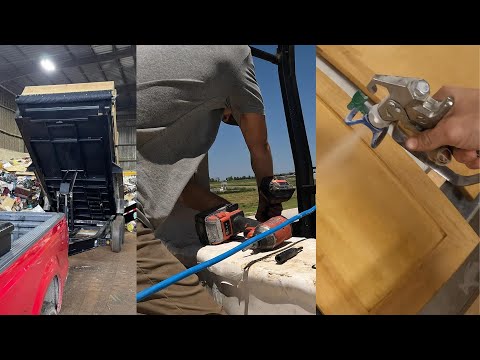
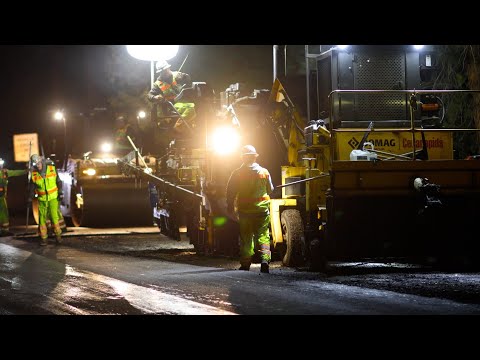
Photo: Jim.henderson (CC0)
Job description
The day usually starts with a blueprint or a supervisor's instructions laying out the dimensions and sequence for the job, then moves into the physical work: measuring and cutting lumber, drywall, pipe, or concrete forms, and putting it together with hand and power tools. There's plenty of straightforward manual labor mixed in too, hauling materials around an active site and setting up or breaking down scaffolding and ladders. This is a catch-all title for construction trades that don't fit a more specific job description, so exact duties vary by site, but crews are generally expected to work under supervision while completing their piece of the job with minimal hand-holding, weather and all.
Pros
- Hands-on, tangible work, seeing a structure go from blueprint to finished result
- Low barrier to entry, no four-year degree needed to start working and earning
- Task variety, cutting, measuring, and assembling a wide range of materials rather than one repetitive motion
Cons
- Above-average hours are common, often exceeding a standard 40-hour week
- Physically demanding work outdoors in changing weather, on uneven or elevated surfaces
- Regular exposure to noise, dust, and heavy equipment on an active job site
A typical day
The gang box opens at 6:45 and the foreman hands out the day: today it's setting concrete forms on the east wing, so the morning is measuring, cutting lumber to the blueprint dimensions, and assembling forms square and braced before the pour window. The work moves with the job's phase — one month it's hanging material, the next it's demo, the next it's helping a specialty crew set equipment. Lunch happens wherever there's shade. The afternoon brings a materials delivery to unload and stage exactly where tomorrow's crew needs it, and the last half hour is cleanup, because a site that's picked up is a site where nobody gets hurt.
Tasks at the job
- Read blueprints or instructions to determine materials, dimensions, and sequence of work.
- Measure, cut, or shape building materials such as lumber, drywall, pipe, or concrete forms.
- Operate hand and power tools to assemble, install, or repair structures and components.
- Load, carry, and position materials and equipment around an active job site.
- Set up and take down scaffolding, ladders, or other temporary structures safely.
- Follow site safety procedures and use required protective equipment at all times.
Workplace & working conditions
Work happens outdoors or in partially finished buildings, often in changing weather and on uneven or elevated surfaces.
The pace is physically demanding and driven by project deadlines, with regular exposure to noise, dust, and heavy equipment. Crews typically work under a supervisor's direction but are expected to complete assigned tasks with limited hand-holding.
Education necessary or common
—
Licenses & certifications
- OSHA 10
- First Aid/CPR
- NCCER Core credential
Courses to take
- Construction Trades/Wood Shop — tool skills and building fundamentals
- Geometry — measuring, squaring, and layout are daily geometry
- Algebra — material takeoffs and cut lists
- Drafting — blueprint reading gets you promoted
- PE/Weight Training — the body is a tool; maintain it
Clubs, activities & competitions
- SkillsUSA construction competitions
- Habitat for Humanity — real builds, real mentors
- Part-time or summer labor with a local contractor
- Set construction for school theater
First steps you can take now
- Build something square this month — a workbench, a planter box — measured and cut yourself
- Take OSHA 10 online; many employers require it day one
- Ask a local contractor about summer helper positions
- Learn to read a tape measure to sixteenths, fast