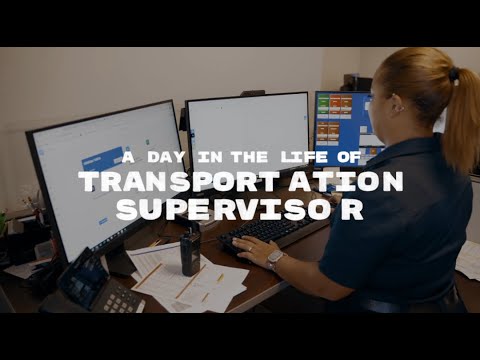
Photo: Raihan Hadianto (CC BY-SA 4.0)
Job description
When a delay, absence, or breakdown threatens the schedule, the supervisor reworks staffing on the fly and coordinates with dispatch and maintenance to keep things moving, then leads the investigation when an accident or complaint comes in. Depending on the employer this could mean overseeing a trucking dock, a bus or rail yard, or another transportation operation, but in every setting the supervisor sits between frontline crews and management. The job splits time between an office or dispatch center and checking on vehicles and crews directly in the field.
Pros
- Leadership role overseeing a transportation crew, with real say over scheduling, training, and safety enforcement
- Mix of office/dispatch planning and hands-on time checking vehicles and crews in the field or yard
- No fixed education requirement listed, making it an accessible step up from a frontline transportation role
Cons
- Above-average hours, expect more than a standard 40-hour work week
- Unplanned absences or equipment breakdowns require fast re-planning under real time pressure
- Carries direct responsibility for crew safety and compliance, which sometimes means enforcing unpopular decisions
A typical day
Dispatch hums at 5 a.m. as the transportation supervisor builds the day: routes covered, two drivers on required rest, and a vehicle down for brakes that reshuffles three runs. The morning is checks and coaching — riding along on a route where telematics flagged hard braking, then a tailgate talk on backing accidents. Midday brings the compliance layer: hours-of-service audits, a drug-test selection notification, and a DOT inspection follow-up. The afternoon closes with tomorrow's load plan and a driver's performance conversation held straight and fair — the fleet runs on trust that the rules apply to everyone.
Tasks at the job
- Assign drivers, operators, or crew members to routes, shifts, or loads each day.
- Review logs and inspection reports to confirm vehicles and equipment meet safety standards.
- Track delivery or route schedules and adjust staffing to cover delays or absences.
- Train crew members on procedures, safety regulations, and company policy.
- Investigate accidents, near-misses, or customer complaints involving the crew.
- Coordinate with dispatch, maintenance, and management to keep operations running smoothly.
Workplace & working conditions
Work happens in a mix of an office or dispatch center and out in the field or yard checking on vehicles and crews directly.
The pace is often fast, with real time pressure to keep shipments or routes on schedule, and unplanned absences or breakdowns require quick re-planning. The role carries responsibility for crew safety and compliance, which some days means enforcing unpopular decisions.
Education necessary or common
—
Licenses & certifications
- CDL (often held even in supervision)
- OSHA 10
- DOT compliance training certificates
- First Aid/CPR
Career path
Courses to take
- Business Math — routes, hours, and costs
- Geography — routing is applied geography
- Auto/Diesel shop — fleet credibility starts with mechanical sense
- Computer Applications — dispatch and telematics software
- English/Composition — compliance documentation
Clubs, activities & competitions
- SkillsUSA diesel or transportation programs
- A job involving driving-adjacent logistics (parts runner at 18, warehouse)
- JROTC — logistics discipline
- Team sports
First steps you can take now
- Learn what FMCSA hours-of-service rules are and why they exist
- Get a clean driving record and keep it — it is a career asset
- Ask a fleet or dispatch supervisor how they moved up
- Get comfortable with spreadsheets and simple routing problems