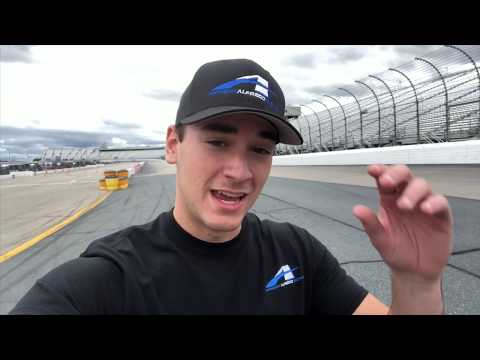
Photo: Racerchick18 (CC BY-SA 4.0)
Job description
Drivers spend as much time preparing as competing: practicing and qualifying to sharpen lap times, working closely with a race engineer to dial in the car's setup, and staying physically conditioned to withstand the heat and G-forces of high-speed cornering. During a race itself, split-second calls on braking, passing, and racing lines separate the winners from the rest of the field, and afterward drivers review data and video with their team to find the next improvement. The cockpit itself is cramped, hot, loud, and genuinely dangerous in a crash. Breaking into the top levels is an extremely expensive path, and the biggest paychecks are concentrated among a small number of drivers at the very top.
Pros
- High upside earning potential, up to $1000k at the top series like NASCAR or F1
- Direct, immediate feedback testing split-second reflexes and decision-making
- No formal degree required, path is built through competition licensing and results
Cons
- Income is concentrated overwhelmingly among a small number of top series drivers
- Real risk of serious injury from high-speed crashes
- Extremely expensive path to break into at the top levels of the sport
A typical day
A race weekend starts long before the green flag: Friday morning is a track walk and engineering briefing, then first practice, where the driver reports what the car does at corner entry with the precision of a test pilot — feedback is half the job. Between sessions comes data review, laying the driver's traces over a teammate's to find the two tenths hiding in braking points. Qualifying demands one perfect lap; the race demands seventy disciplined ones, managing tires and traffic. Weekdays are the unseen grind: simulator sessions, physical training for heat and G-load, and sponsor obligations — because in racing, funding is as competitive as the track.
Tasks at the job
- Practice and qualify on race tracks to refine lap times and car handling.
- Compete in races requiring split-second decisions on braking, passing, and racing lines.
- Work with engineers and pit crews to adjust car setup based on track and weather conditions.
- Maintain physical conditioning to withstand the physical demands of high-G cornering and heat.
- Review race data and video with the team to identify areas for improvement.
Workplace & working conditions
Work happens inside a cramped, heavily reinforced cockpit at high speed, exposed to intense heat, noise, vibration, and G-forces, with real risk of serious injury in a crash.
The pace during a race is extraordinarily fast, demanding split-second reflexes and sustained intense focus for the full duration. Stakes are high both physically and competitively, and performance is scrutinized publicly by teams, sponsors, and fans.
Education necessary or common
No formal degree required; a competition license from the sanctioning body, earned by moving up through progressively faster amateur and junior racing series
Licenses & certifications
- Competition license from the relevant sanctioning body (SCCA, FIA ladder, etc.)
Career path
Related fields
Courses to take
- Physics — grip, weight transfer, and aerodynamics are the sport's language
- Physical Education & fitness training — drivers are endurance athletes
- Auto Shop — mechanical understanding sharpens feedback to engineers
- Algebra II — gear ratios, fuel windows, and lap-time math
- Business/Marketing — sponsorship is self-marketing
Clubs, activities & competitions
- Karting — the universal entry point; club-level racing exists nationwide
- Sim racing leagues (iRacing) — genuinely respected as a development tool now
- Auto shop club or FSAE-style build programs
- Any endurance sport for fitness
First steps you can take now
- Get to a karting track this month and set a baseline lap time
- Start a sim racing setup or use a friend's — consistent laps first, speed second
- Study one onboard qualifying lap and map braking points corner by corner
- Look up SCCA and NASA regional events — spectating and volunteering get you in the paddock