Photo: Jonathan Schilling (CC BY-SA 4.0)
Job description
The work usually starts with gathering information: interviewing staff, observing how a unit actually functions day to day, and reviewing existing forms, reports, and procedures. From there, analysts document what they find and write up recommendations, whether that's redesigning a workflow, reorganizing a department, or overhauling how information flows between teams. Because changes often require buy-in from the people who'll actually use them, analysts spend real time meeting with management and staff to make sure any new system is workable once it's implemented, not just correct on paper.
Pros
- High upside earning potential, with top pay reaching $172k
- Much faster than average projected job growth (8.8% over the next decade)
- Large, well-established field with over 98,000 jobs nationwide, offering broad opportunity
Cons
- Fast-paced role with real deadline pressure to deliver recommendations on time
- Requires interviewing and observing staff directly, which can create friction with people being evaluated
- Bachelor's degree required, and building credibility with client management often takes years
A typical day
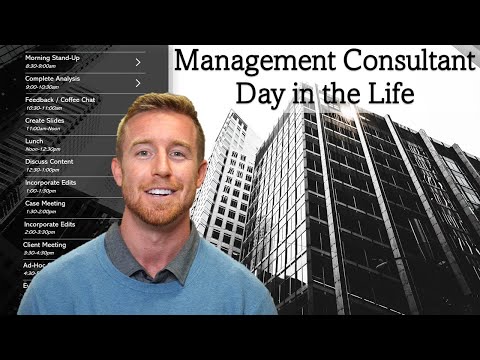
Week three of the engagement, and the client's claims-processing department still takes forty days to do what competitors do in ten — today is about proving why. The morning is process mapping with the people who actually do the work: an analyst's most reliable finding is that the official process and the real one differ, and the gap costs millions. Two interviews in, the culprit emerges — every exception routes through one overloaded approval desk. The afternoon is the data to prove it: cycle-time analysis pulled from the workflow system, quantified into a waterfall chart that shows where the forty days go. Then the careful craft of recommendations: three options priced with tradeoffs, because clients buy choices, not lectures. A steering committee preview closes the day — findings socialized before the formal readout so nobody is ambushed. The deliverable is a deck, but the product is a decision the client actually makes.
Tasks at the job
- Gather and organize information on problems or procedures.
- Confer with personnel concerned to ensure successful functioning of newly implemented systems or procedures.
- Document findings of study and prepare recommendations for implementation of new systems, procedures, or organizational changes.
- Plan study of work problems and procedures, such as organizational change, communications, information flow, integrated production methods, inventory control, or cost analysis.
- Interview personnel and conduct on-site observation to ascertain unit functions, work performed, and methods, equipment, and personnel used.
- Review forms and reports and confer with management and users about format, distribution, and purpose, identifying problems and improvements.
Workplace & working conditions
Work happens indoors in a climate-controlled setting, and most of the day is spent sitting at a desk.
The pace is often fast, with real time pressure to meet deadlines, and you're expected to exercise significant independent judgment day to day. The work is highly structured, following set procedures.
Education necessary or common
Bachelor's degree
Common college majors
Licenses & certifications
- CMC (Certified Management Consultant) — the field's formal credential, mid-career
- Lean Six Sigma Green Belt
- PMP for implementation-heavy roles
Career path
Related fields
Courses to take
- AP Statistics — analysis is the job title's first word
- AP English Language — findings die without clear writing
- AP Economics — cost structures and incentives
- AP Computer Science Principles — data tools and systems fluency
- Public Speaking — presenting to skeptical rooms
- Business electives — organizational vocabulary
Clubs, activities & competitions
- DECA — case competitions mirror the work directly
- FBLA — business analysis events
- Math team — quantitative confidence
- Student government — organizational problem-solving with real constraints
- Debate — structured recommendation and defense
First steps you can take now
- Do a real process analysis: map how something at school actually works versus its official process, and quantify one improvement
- Learn spreadsheet modeling this semester
- Read one case-interview practice book or site — the field's hiring ritual teaches its thinking style
- Interview a consultant or business analyst about a project start to finish