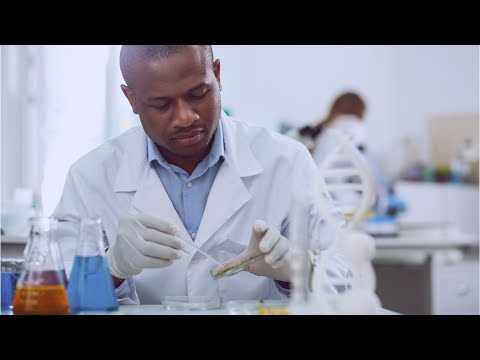
Photo: Mateus Figueiredo (CC BY 4.0)
Job description
Because this title covers biologists whose specialty doesn't have its own separate listing, the specific mix of lab, field, and office work varies a lot depending on what a scientist actually studies, but the core cycle is similar: design a study, collect and analyze samples or data, and write up the findings for publication or for an employer. Much of the job outside active research involves securing the grants and funding that make the work possible in the first place, then maintaining the equipment, cultures, or specimens the research depends on. Career progression often means specializing further within a subfield, taking on larger grant-funded projects, or moving toward a senior research or lab-leadership role.
Pros
- High upside earning potential, up to $168k
- Varied work environment mixing lab, field, and office time depending on specialty
- Direct contribution to scientific knowledge through original research and publication
Cons
- Above-average hours, expect more than a standard 40-hour work week
- Slower than average projected job growth, only about 1.2% over the next decade
- Funding for research often depends on successfully winning grants, adding uncertainty beyond the science itself
A typical day
Specialist biologists' days track their niche. A fisheries biologist might spend this one on a river — electrofishing survey at dawn, netting stunned fish to measure, tag, and release, then entering data streamside before the afternoon's habitat assessment. A biotech-industry biologist's version is indoors: cell cultures fed and checked, an assay run against a drug candidate, results logged in an electronic notebook a regulator might someday read. A wildlife refuge biologist walks transects counting nesting pairs and battles invasive plants with a management plan and a budget. What unites the field is the shape of the work: careful observation, honest records, and the patience to let living systems answer questions at their own pace.
Tasks at the job
- Design and run experiments or field studies within a specific biological specialty.
- Collect, prepare, and analyze biological samples or data.
- Write up research findings for publication or for use by an employer.
- Maintain lab equipment, cultures, or specimens according to protocol.
- Apply for grants or funding to support ongoing research.
- Present findings to colleagues, funders, or the public.
Workplace & working conditions
Work happens in a mix of laboratory, field, and office settings depending on the specific biological specialty, often involving specimens, cultures, or field samples.
Demands differ by specialty since this title covers biologists who don't fit a more specific title, but most of the work is careful and methodical, with real consequences for sloppy data collection or recordkeeping.
Education necessary or common
—
Common college majors
Licenses & certifications
- Varies by specialty: pesticide license, electrofishing certification, or wildlife-handling permits arrive with the job
Career path
Courses to take
- AP Biology
- AP Chemistry
- AP Environmental Science
- AP Statistics — every branch of biology runs on data now
- AP English Language
Clubs, activities & competitions
- Science Olympiad
- Envirothon — team ecology competition
- Volunteer for a wildlife refuge, nature center, or stream-monitoring program
- Science fair
First steps you can take now
- Join a citizen-science project (iNaturalist, eBird, stream monitoring) and contribute real observations monthly
- Volunteer with your nearest nature center or wildlife agency program
- Do a field-notebook month: one page of dated, careful observations of any organism daily
- Interview a biologist at a state agency or company about what their actual week contains