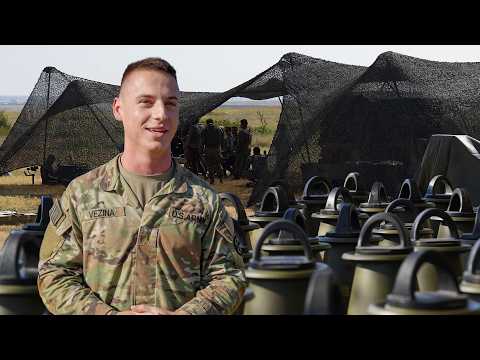
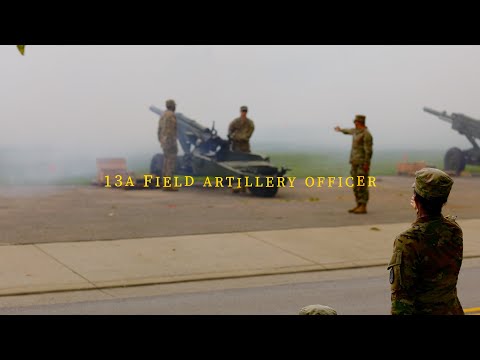
Photo: Georgia National Guard (CC BY 2.0)
Job description
Officers oversee the tactical deployment of field artillery and air-defense missile units, coordinate with infantry and air units to fold fire support into a larger operation, and in some assignments direct the targeting and launch of intercontinental ballistic missiles or the handling of nuclear munitions. Day to day, the work centers on directing fire-control communications, calculating targeting solutions, and enforcing strict safety protocols during live-fire training. Because targeting errors carry serious consequences, the role demands precision and real responsibility for the safety of the crews they command.
Pros
- Significant leadership responsibility directing personnel and complex weapons systems
- Develops specialized technical skills in targeting, fire control, and logistics coordination
- Varied work settings, from field exercises to command centers or shipboard assignments
Cons
- Targeting errors carry serious, potentially life-or-death consequences
- Often works under austere field conditions with limited comfort or infrastructure
- High responsibility for personnel safety during every live-fire exercise
A typical day
As a fire direction officer, the lieutenant's field day runs on radio calls: forward observers send target data, the fire direction center computes solutions, and the officer approves each mission — checking the math, the clearance of friendly positions, and the ammunition ledger in seconds, because guns waiting on a decision are guns not supporting the infantry. Planning hours go to building fire-support plans layered onto a maneuver commander's scheme, briefed off map overlays. In garrison the work turns to certifying crews, maintenance oversight, and counseling soldiers. Air-defense and missile officers trade the howitzer battery for radar screens and launcher sections, but the same discipline governs: precision delegated, verified, and owned.
Tasks at the job
- Plan and direct artillery or missile fire support for ground operations.
- Position and coordinate weapons crews, equipment, and ammunition.
- Calculate targeting data and fire control solutions.
- Coordinate with infantry and air units to integrate fire support into broader operations.
- Oversee maintenance and readiness of weapons systems.
- Enforce safety protocols during live-fire training and operations.
Workplace & working conditions
Work happens outdoors at field training areas or firing ranges, sometimes in underground command centers or aboard ships, often under austere field conditions.
Precision is essential, since targeting errors carry serious consequences, and the work is highly structured around strict fire-control procedures. Significant responsibility for personnel safety accompanies every live-fire exercise.
Education necessary or common
—
Common college majors
Licenses & certifications
- Officer commission and Field Artillery/Air Defense Basic Officer Leader Course (earned in service)
Career path
Courses to take
- AP Calculus AB — fire direction rewards mathematical confidence
- AP Physics 1
- AP English Language
- AP U.S. Government
- PE / fitness
Clubs, activities & competitions
- JROTC with command positions
- Math team
- Varsity sport leadership
- Model UN or Boys/Girls State
First steps you can take now
- Explore ROTC scholarship applications and service academy timelines beginning junior year
- Interview a field artillery or air defense officer about how branch assignment works
- Lead something with real logistics this year and run it like an operation
- Sharpen rapid mental math and map skills together — plot points on a topo map and compute distances