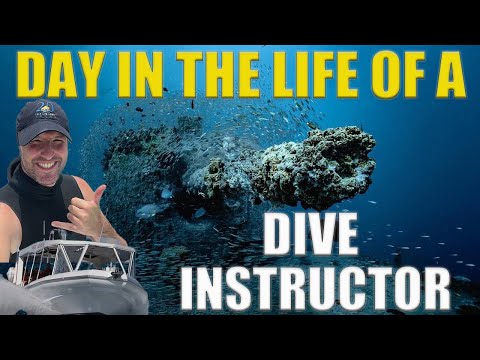
Photo: Yu Diving (CC BY-SA 2.0)
Job description
A day might include walking students through diving theory and equipment use, then getting in the water to supervise open-water dives, watching each diver's air supply, buoyancy, and behavior closely. Instructors also inspect and maintain gear like tanks and regulators before every session, brief divers on site conditions and emergency procedures, and log dives and paperwork according to certifying-agency standards. The safety stakes are genuinely serious, since equipment failure or panic underwater can be life-threatening, and work follows the rhythm of weather, tides, and tourist season, often based out of dive resorts or coastal shops where pay can be modest in exchange for the location.
Pros
- Hands-on, outdoor-and-water work at dive resorts, lakes, or coastal shops
- No four-year degree required, only diving certification and experience
- Varied work mixing classroom teaching, pool sessions, and open-water dives
Cons
- Above-average hours, expect more than a standard 40-hour work week
- Entry-level pay can be quite low, especially outside peak tourist season
- Carries genuine safety stakes, since equipment failure or diver panic can be life-threatening
A typical day
Pool morning: four new students, and the instructor runs them through mask clearing and regulator recovery in the shallow end, watching each face for the panic flicker that needs a calm hand on the shoulder — building comfort underwater is the actual product. Surface interval means gear checks and logbook signatures. The afternoon is open-water day at the quarry: two checkout dives where students demonstrate skills at depth, the instructor positioned where every student is one kick away, running the dive plan conservatively because certification cards are promises about safety. Between courses there's tank fills, compressor maintenance, retail time in the shop, and trip planning for next month's reef excursion. Office views vary; today's was twenty feet down.
Tasks at the job
- Teach diving theory, equipment use, and underwater skills to certification students.
- Lead supervised open-water dives and monitor each student's air supply, buoyancy, and behavior.
- Inspect and maintain tanks, regulators, and other dive gear before each session.
- Brief divers on dive site conditions, currents, marine life, and emergency procedures.
- Respond to diver distress or equipment problems underwater.
- Complete certification paperwork and log dives per training agency standards.
Workplace & working conditions
Work happens both in classrooms or pools for training and in open water -- oceans, lakes, or quarries -- often at dive resorts or coastal shops.
The work carries genuine safety stakes since equipment failure or panic underwater can be life-threatening, so constant awareness of each student is required. Schedules follow weather, tides, and tourist season, and the job demands strong physical conditioning.
Education necessary or common
Certification through a recognized diving organization (e.g. PADI, NAUI), built on top of significant personal diving experience
Licenses & certifications
- PADI/NAUI/SSI Instructor rating (via Divemaster and Instructor Development Course)
- CPR/First Aid/O2 Provider
- Rescue Diver certification (prerequisite)
Career path
Related fields
Courses to take
- Physics — pressure, buoyancy, and gas laws are the certification curriculum
- Biology/Marine Biology — the underwater world you'll interpret
- Health/Anatomy — dive physiology and safety
- Physical Education & Swimming — watermanship is the foundation
- Speech — teaching is performing
Clubs, activities & competitions
- Swim team or water polo — comfort and conditioning in water
- Lifeguarding
- Marine biology or environmental club
- Scouting aquatics programs
First steps you can take now
- Get your Open Water certification — minimum age for full certification is 15 with most agencies
- Swim seriously: distance, treading, and underwater comfort
- Log dives whenever possible; instructor tracks require dive experience counts
- Talk to a local dive shop about the Divemaster-then-Instructor pathway and its timeline