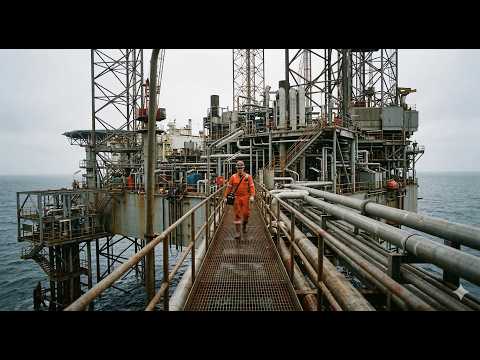
Photo: National Institute for Occupational Safety and Health (NIOSH) from USA (Public domain)
Job description
The job means running pipes, valves, and pumps, watching pressure gauges and well conditions for early signs of trouble, and assembling or disassembling drill pipe as a well goes deeper. Safety checks and equipment maintenance are constant, since a missed problem can mean a blowout or mechanical failure. Offshore crews live on the platform for weeks at a stretch, working 12-hour shifts amid heavy machinery, high-pressure lines, and constant noise before rotating home, and that time away comes with meaningfully higher pay than onshore roles. Most roughnecks start with no formal degree and see pay and responsibility climb with experience and certifications.
Pros
- No formal degree required, with pay and responsibility rising through on-the-job experience
- Strong earning potential up to $120k, especially in higher-paying offshore roles
- Rotating schedule (e.g. two weeks on, two off) gives extended stretches of time off
Cons
- Very long hours, with 12-hour shifts common for weeks at a stretch
- Offshore work means living on the platform for weeks, far from home
- Constant exposure to hazardous equipment, chemicals, heights, and noise
A typical day
The hitch is 14 days on, and today starts at 5:30am with a safety meeting on the drill floor — every task reviewed, every hazard named, because complacency is the rig's only unforgivable sin. The morning is tripping pipe: hours of coordinated, physical work in steel-toed rhythm, making and breaking connections as thousands of feet of drill string come out of the hole. Lunch is fast and enormous. The afternoon brings a mud-pump repair with the motorman, deck maintenance in weather that doesn't care, and constant housekeeping, since a clean rig is a safe rig. A pre-tour handover briefs the night crew before a shower, a phone call home if the signal allows, and sleep that comes easily. The paycheck reflects the reality: this trade buys its wage with sweat, distance, and discipline.
Tasks at the job
- Operate and maintain drilling equipment, including pipes, valves, and pumps, on an offshore or onshore rig.
- Monitor pressure gauges and well conditions to detect problems before they escalate.
- Assemble and disassemble sections of drill pipe as wells are drilled deeper.
- Perform routine safety checks and equipment maintenance to prevent blowouts or mechanical failure.
- Work rotating shifts to keep drilling operations running continuously.
Workplace & working conditions
Offshore rig work means living on the platform for weeks at a time, far from shore, surrounded by heavy machinery, high-pressure lines, and constant noise, in all weather including storms. The environment is loud, and exposure to hazardous equipment, chemicals, and heights is routine.
Shifts often run 12 hours for weeks straight before a rotation home, and the pace is dictated by the drilling operation rather than personal preference. Safety margins are tight given the risk of blowouts or equipment failure, so strict procedure and constant vigilance are non-negotiable.
Education necessary or common
No formal degree required; entry-level roughneck positions train on the job, with pay and responsibility rising with experience and certifications
Licenses & certifications
- SafeLand USA / SafeGulf orientation
- OSHA 10
- HUET helicopter underwater escape training (offshore)
- Well control certification (career step)
Career path
Related fields
Courses to take
- Welding, Auto Shop, or any mechanical CTE course — rigs run on mechanical aptitude
- Physical Education and weight training — the job is heavy, repetitive labor
- Physics — pressure, loads, and hydraulics keep you alive when understood
- Algebra — mud weights, volumes, and pipe tallies
- Health — heat stress and fatigue management matter offshore
Clubs, activities & competitions
- SkillsUSA — welding and industrial trades competitions
- Football, wrestling, or any physically demanding sport
- Farm, ranch, landscaping, or construction summer work — proven work ethic is the resume
- FFA — equipment and mechanics events
First steps you can take now
- Get honest about the lifestyle first: read roughneck accounts of 14/14 rotations and remote living
- Earn OSHA 10 online, and look up SafeLand/SafeGulf orientation courses the industry expects
- Build physical work capacity now with a real training program
- Ask a drilling contractor's HR page what a floorhand needs on day one — usually 18+, drug-test clean, and willing