Photo: U.S. Department of Energy from United States (Public domain)
Job description
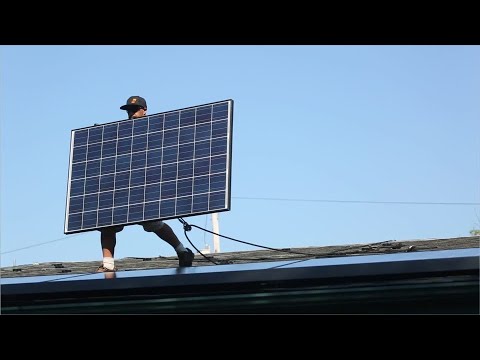
Rather than installing panels directly, a manager visits customer sites to scope out system requirements, plans installation schedules to meet code and permitting rules, and supervises installers, technicians, and subcontractors to keep a project on budget and up to safety standards. Because installations happen on rooftops and other job sites, managers spend real time out in the field alongside crews, stepping in with technical guidance when an unusual wiring or mounting issue comes up. With experience, installation managers can move into regional operations roles overseeing multiple crews, or into estimating and business development for a solar contractor.
Pros
- Strong pay ceiling near $128k, with only vocational training or an associate's degree required
- Faster than average projected growth (5.3%) in a large, expanding field of 74,400 jobs
- Leadership role directing crews and vendors rather than doing installation labor solo
Cons
- Above-average hours, routinely more than a standard 40-hour work week
- Fast-paced, deadline-driven work managing contractors, budgets, and code compliance at once
- Outdoor site visits expose managers to the same weather, heights, and hazards as installers
A typical day
The day starts at 6:45 in the yard, checking that both crews have the panels, rail, and wire for their jobs before the trucks roll. Mid-morning means a site visit: climbing a roof to verify the layout matches the design, then a hard conversation with a homeowner about a two-day weather delay. Lunch happens in the truck between a permit call with the city and a supplier chasing a late inverter shipment. The afternoon is quality control on a finished install -- torque checks, wire management, labeling -- so the inspector has nothing to flag tomorrow.
Tasks at the job
- Provide technical assistance to installers, technicians, or other solar professionals in areas such as solar electric systems, solar thermal systems, electrical systems, or mechanical systems.
- Monitor work of contractors and subcontractors to ensure projects conform to plans, specifications, schedules, or budgets.
- Visit customer sites to determine solar system needs, requirements, or specifications.
- Purchase or rent equipment for solar energy system installation.
- Plan and coordinate installations of photovoltaic (PV) solar and solar thermal systems to ensure conformance to codes.
- Supervise solar installers, technicians, and subcontractors for solar installation projects to ensure compliance with safety standards.
Workplace & working conditions
Work happens primarily outdoors, exposed to whatever the weather is doing, and most of the day is spent on your feet, and you work in close physical proximity to coworkers or the public for much of the shift. Noise levels can be distracting or uncomfortable. The role involves regular exposure to hazardous equipment or conditions and contaminants and working at heights, and standard protective equipment (gloves, safety glasses, and similar) is expected.
The pace is often fast, with real time pressure to meet deadlines, and you're expected to exercise significant independent judgment day to day. Precision and accuracy are essential to the work, and the work is highly structured, following set procedures.
Education necessary or common
Vocational training, apprenticeship, or associate's degree
Licenses & certifications
- NABCEP PV Installation Professional
- OSHA 30
- Electrician license (path varies by state)
Career path
Related fields
Courses to take
- Physics -- electricity and load basics underpin every install
- Geometry -- roof angles, rafter spacing, and array layout are daily math
- Shop or construction trades classes -- tool and jobsite fluency
- Environmental Science -- the why behind the solar industry
- Business or entrepreneurship electives -- managers handle budgets and clients
Clubs, activities & competitions
- SkillsUSA -- construction and electrical competitions built for this path
- Habitat for Humanity volunteering -- real construction-site experience
- Robotics club -- wiring and troubleshooting practice
- A part-time job with a contractor or hardware store
First steps you can take now
- Watch a full residential solar install series on YouTube and learn the part names
- Ask a local solar company if you can shadow a crew for a day
- Take the free OSHA 10 construction safety course online
- Learn to read a basic electrical diagram