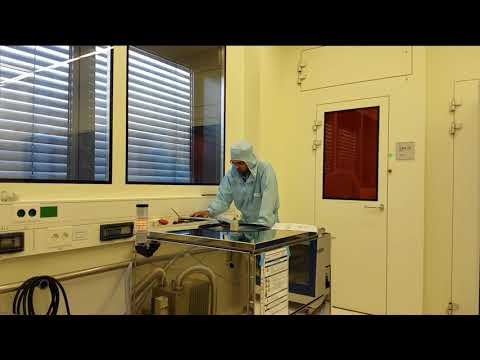
Photo: University College London Faculty of Mathematical & Physical Sciences (CC BY 2.0)
Job description
The work involves designing and synthesizing nanoscale materials or devices using specialized lab equipment, then operating tools like electron microscopes to characterize the structures produced. Much of the job is experimental: running tests on how nanomaterials behave under different chemical or physical conditions, then documenting results for patent applications or peer-reviewed papers. Nanotechnologists often collaborate with engineers or manufacturers to help scale a lab discovery into an actual usable product, working in cleanroom environments across both academic research and industry R&D.
Pros
- Strong pay even at entry level, with a ceiling reaching $150k
- Standard 40-50 hour week, steady and experiment-driven rather than externally rushed
- Work sits at the cutting edge of medicine, electronics, and energy applications
Cons
- A master's or PhD in a specialized science field is typically required for research roles
- Cleanroom protocols demand meticulous, exacting attention since small errors can ruin sensitive work
- Funding and publication deadlines add periodic pressure on top of already careful, slow work
A typical day
Morning starts with the atomic force microscope, scanning a sample surface one nanometer-high line at a time to confirm yesterday's synthesis produced particles in the target size range. The bench work that follows is exacting chemistry: adjusting a reaction's temperature and timing to nudge particle growth, with each batch characterized before the next is planned. A midday group meeting turns into a productive argument about whether an odd spectroscopy peak is signal or contamination. The afternoon is split between writing — a manuscript section and a fellowship application, since research runs on funded proposals — and mentoring a newer student through their first synthesis. The last entry in the lab notebook sets up tomorrow's question.
Tasks at the job
- Design and synthesize materials or devices at the molecular or atomic scale using specialized lab equipment.
- Operate electron microscopes and other imaging tools to characterize nanoscale structures.
- Run experiments testing how nanomaterials behave under different chemical or physical conditions.
- Document experimental results and contribute to patent applications or peer-reviewed publications.
- Collaborate with engineers or manufacturers to scale lab discoveries into usable products.
Workplace & working conditions
Work happens almost entirely indoors in cleanroom labs requiring protective gowning, and much of the work involves sensitive instruments that demand a vibration-free, dust-controlled environment.
Precision and meticulous attention to protocol are essential, since nanoscale work is easily disrupted by contamination or small errors. The pace is typically steady and experiment-driven rather than externally rushed, though funding and publication deadlines add periodic pressure.
Education necessary or common
Master's or PhD in materials science, chemistry, physics, or a related field is typical for research roles
Common college majors
Career path
Related fields
Courses to take
- AP Chemistry — synthesis and characterization are the daily craft
- AP Physics — the forces that dominate at small scales
- AP Calculus BC — required mathematical depth for the graduate route
- AP Biology — for the biomedical side of nano research
- AP English Language and Composition — papers and proposals fund the science
Clubs, activities & competitions
- Science fair — an original materials or chemistry project, refined over multiple years
- Science Olympiad — chemistry and materials events
- University summer research program — apply broadly junior year
- Chemistry or STEM club leadership
First steps you can take now
- Email a university nanoscience lab asking to visit — seeing an AFM or SEM in person makes the field concrete
- Run a careful home experiment series (crystal growth, thin films from soap bubbles) with real measurement
- Read how sunscreen, OLED screens, or mRNA vaccines use nanoparticles — pick the thread that hooks you
- Aim for the strongest chemistry and physics schedule your school allows