Photo: Luis Alvaz (CC BY-SA 4.0)
Job description
Much of the work happens before the event: meeting with clients to plan a menu and quantities based on guest count and budget, then prepping food in bulk, often at an off-site commercial kitchen. On the day itself, caterers coordinate transport, setup, and food safety, hire and manage serving and cleanup staff, and handle whatever last-minute changes come up, a shifted guest count, a delayed start time, a new dietary request. Weekend and evening work is the norm since that's when most events happen, and the schedule leaves little room for delay once guests arrive. Business is often seasonal, with several events running back-to-back during peak months and much quieter stretches the rest of the year.
Pros
- No formal education required, though culinary training or restaurant experience helps build the skill set
- Pay can reach $110k at the top of the range, with volume increasing sharply during peak event season
- Varied work running different events each week rather than the same routine day after day
Cons
- Above-average hours, expect more than a standard 40-hour work week, concentrated on evenings and weekends
- Day-of schedule leaves little room for delay once guests arrive, no matter what goes wrong
- Managing food, staff, and timing simultaneously under real time pressure is a constant demand
A typical day
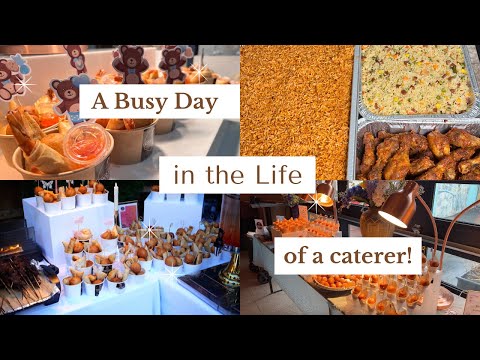
Event day runs backward from a 6pm reception for 150: the morning is production cooking in the commissary — proteins roasted and held, sauces built, canapés assembled by the hundred with the crew moving like a line kitchen that has to travel. Loading is its own discipline: hot boxes, cold chain, chafers, linens, and the checklist that has prevented every forgotten-corkscrew disaster since the one that created it. On site by 3:30, the caterer becomes a general: kitchen tent staged, timeline synced with the planner, servers briefed on the menu's allergens and pronunciations. Service is controlled adrenaline — passed trays flowing, the buffet replenished before it looks touched, a vegan guest accommodated without fuss. Breakdown, load-out, and the drive home tally the real profit-and-loss. Sales calls and tastings fill the between-days; the calendar's feast-or-famine is the business model.
Tasks at the job
- Plan menus with clients based on the event type, guest count, and budget.
- Prepare food in bulk, often off-site, ahead of an event.
- Coordinate transport, setup, and food safety during transit and service.
- Hire and manage event-day staff for serving and cleanup.
- Rent or coordinate equipment such as tables, linens, and chafing dishes.
- Handle last-minute changes in guest count, timing, or menu requests.
Workplace & working conditions
Work happens in a commercial kitchen for prep and at event venues, which vary from banquet halls to outdoor tents, for service.
Weekend and evening work is common since most events happen then, and the day-of schedule leaves little room for delay once guests arrive. The work requires staying composed while managing several moving parts -- food, staff, and timing -- at once.
Education necessary or common
No formal degree required, though culinary training or restaurant experience is common
Licenses & certifications
- ServSafe Manager certification
- Food handler's card
- State catering/food business licensing (when operating)
- TIPS alcohol service (event bars)
Career path
Related fields
Courses to take
- Culinary Arts — every course offered
- Business math / Accounting — catering lives or dies on costing
- Health / Food Safety
- AP English Language — proposals and client communication
- Marketing
Clubs, activities & competitions
- FCCLA — culinary and event-management competitions
- DECA entrepreneurship events
- Cook for real events: family parties, team banquets, fundraiser dinners
- Part-time restaurant or banquet work
First steps you can take now
- Cater one real event this season — even a 20-person party — with a written menu, costed ingredients, and a timeline
- Get a food handler's card now and learn your state's cottage-food and commissary rules
- Work a banquet or catering shift for an established company and study their systems
- Cost out three menus per person and learn where the margin actually is