Photo: PEO ACWA (CC BY 2.0)
Job description
On a given day, this might mean monitoring live data from a plant process, chasing down the cause of a manufacturing problem on the floor, or evaluating equipment for ways to cut costs, improve safety, or meet environmental rules. Because much of the equipment involves real chemical hazards, chemical engineers also write the safety procedures that protect workers near hazardous reactions. Many specialize as their careers progress, settling into plant operations, research and development, or environmental and safety compliance. It's a well-paid, bachelor's-level field, with salaries commonly reaching well over $100,000, though this specialty is smaller than some engineering paths and growing slowly.
Pros
- High upside earning potential, up to $183k, with strong pay even at entry level
- Broad applicability across industries like fuel, plastics, and consumer goods manufacturing
- Team-based work solving concrete process and production problems
Cons
- Small field nationally (about 1,100 jobs), so openings may be geographically limited
- Slower than average projected growth (2.6%)
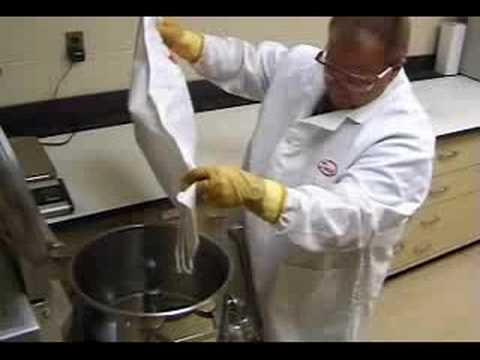
- Regular exposure to hazardous equipment and conditions requiring protective gear
A typical day
The morning's data review is the job in miniature: overnight the pilot reactor's yield dropped two points, and the engineer works the why — feed composition checked, temperature profiles plotted, a hypothesis about catalyst deactivation formed and a test designed before lunch. Process engineering days live in this loop: simulation models updated in Aspen, a heat-exchanger redesign that will cut steam costs, and a management-of-change document, because in a chemical plant even a gasket-swap idea gets engineered review — process safety is the discipline's conscience, taught by hard history. The afternoon walks the unit itself: field-verifying a pump's behavior with the operators whose practical knowledge the good engineers treat as data. A capital-project meeting closes the day, defending a design's economics. The profession turns molecules into products at scale, safely, for a living.
Tasks at the job
- Monitor and analyze data from processes and experiments.
- Develop safety procedures to be employed by workers operating equipment or working in close proximity to ongoing chemical reactions.
- Develop processes to separate components of liquids or gases or generate electrical currents, using controlled chemical processes.
- Troubleshoot problems with chemical manufacturing processes.
- Evaluate chemical equipment and processes to identify ways to optimize performance or to ensure compliance with safety and environmental regulations.
- Conduct research to develop new and improved chemical manufacturing processes.
Workplace & working conditions
Work happens indoors in a climate-controlled setting, and most of the day is spent sitting at a desk. The role involves regular exposure to hazardous equipment or conditions, and standard protective equipment (gloves, safety glasses, and similar) is expected.
There's a regular, moderate amount of time pressure, and you're expected to exercise significant independent judgment day to day. Almost all of the work is done as part of a team.
Education necessary or common
Bachelor's degree
Common college majors
Licenses & certifications
- FE then PE license (valuable in design and consulting)
- OSHA/process safety training (industry-provided)
Career path
Related fields
Courses to take
- AP Chemistry — the namesake foundation
- AP Calculus BC — the field is mathematical throughout
- AP Physics C
- AP Biology (bioprocessing paths)
- AP Computer Science A — process modeling rewards code
Clubs, activities & competitions
- Science Olympiad (Chem Lab events)
- Chemistry Olympiad (USNCO)
- FIRST Robotics
- Math team
First steps you can take now
- Take the local USNCO exam this spring — the ladder starts with one test at your school
- Do a kitchen-scale process experiment: optimize a variable (temperature, concentration) across trials and analyze yield honestly
- Watch a process-plant walkthrough video and learn what a distillation column, heat exchanger, and reactor each do
- Interview a chemical engineer about the difference between the classroom and the plant