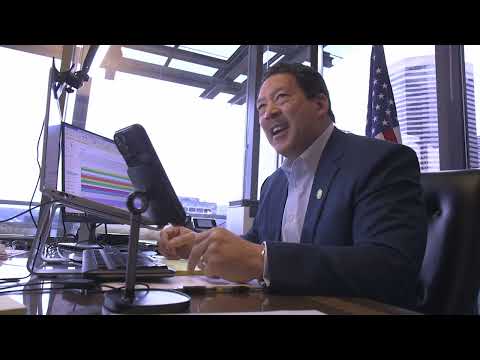
Photo: Irvin Parco Sto. Tomas (CC BY-SA 4.0)
Job description
Set the city's policy agenda and budget priorities, oversee (or work alongside a city manager who oversees) city departments and services, and represent the city publicly, a role built almost entirely on winning elections, typically after experience in city council, business, or community leadership. The role is highly public, with constant scrutiny from residents, media, and political opponents, and disagreements can turn contentious. Hours are irregular, since evening council meetings and weekend community events are routine on top of a normal workday.
Pros
- Direct power to set budget priorities and policy agenda that shape the whole city
- High earning ceiling in larger cities, up to $250k for full-time mayoral roles
- Visible, high-impact public service with wide latitude to appoint staff and negotiate priorities
Cons
- Pay can be minimal or unpaid in smaller towns before scaling up in bigger cities
- Irregular hours, evening council meetings and weekend events routinely stack on a normal workday
- Constant public scrutiny from residents, media, and political opponents, with contentious disputes routine
A typical day
The day opens at a ribbon-cutting for a rebuilt fire station — ceremonial, yes, but the handshakes are constituent service in its oldest form — then pivots hard at 9:30 to the budget workshop: the police chief wants six officers, the library needs a roof, and revenue supports one of them fully. The mayor's job is the arithmetic of values, argued in public. Midday brings the city manager one-on-one (in council-manager cities the mayor governs through this partnership) reviewing a stalled development negotiation and a water main replacement schedule. The afternoon holds constituent hours — a small business owner tangled in permitting, a neighborhood delegation about traffic — where half the job is fixing systems one complaint at a time and half is explaining honestly what can't be fixed by Tuesday. The evening council meeting runs long: public comment passionate, one vote contentious, the mayor gaveling with patience and counting to four (a majority) all night. Home by ten, phone still on; the town's emergencies don't check the calendar. The office's real power varies by charter, but its real currency is identical everywhere: trust, banked slowly, spent carefully.
Tasks at the job
- Preside over city council meetings and set the agenda for local governance issues.
- Propose and negotiate the city budget with council members and department heads.
- Represent the city at public events, press conferences, and regional or state meetings.
- Appoint or oversee department heads and city staff, depending on the city's charter.
- Respond to constituent concerns and mediate disputes between residents, businesses, or agencies.
- Sign or veto local ordinances passed by the city council.
Workplace & working conditions
Work happens in a mix of a city hall office, public meeting rooms, and community events across the city, with frequent travel to local functions.
The role is highly public, with constant scrutiny from residents, media, and political opponents, and disagreements can turn contentious. Hours are irregular, since evening council meetings and weekend community events are routine on top of a normal workday.
Education necessary or common
No formal requirement; varies enormously by city size, from an unpaid part-time role in a small town to a demanding full-time job in a major city
Common college majors
Licenses & certifications
- No credential required beyond election — residency, age, and ballot access per city charter
- Municipal leadership programs (state municipal leagues train new officials)
- The real prerequisites: a record of community trust and a tolerance for public life
Related fields
Courses to take
- AP US Government — municipal charters, budgets, and process
- AP Economics — city budgets are economics with potholes
- Public Speaking — the job is performed aloud
- AP English Language — proclamations, speeches, and hard letters
- AP Statistics — reading city data honestly
- AP US History — every local fight has a lineage
Clubs, activities & competitions
- Student government — run, win, govern, deliver
- Youth city council or mayor's youth advisory board — most cities have one and members see government from inside
- Debate — public argument with civility
- Volunteer for local campaigns — city elections run on handfuls of people
- Community service with visible follow-through
First steps you can take now
- Attend three city council meetings and stay through public comment — the job description is on display
- Join or petition to start your city's youth advisory council
- Interview your mayor or a council member — local officials say yes to students constantly
- Organize one real improvement in your community and shepherd it through the actual approval process — the full civic loop in miniature