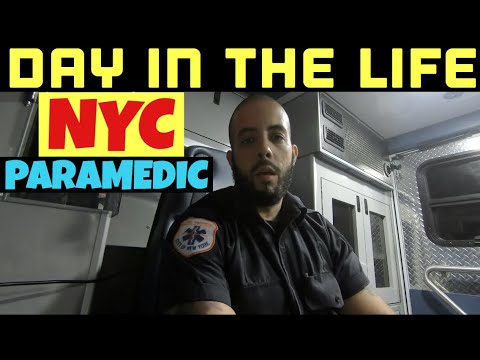
Photo: Christopher Jones (Public domain)
Job description
On scene, paramedics assess patients and decide the right level of intervention, then administer medications, start IVs, and manage airways under medical protocols. They interpret cardiac rhythms and can perform advanced procedures like defibrillation, staying in contact with a supervising physician for guidance on complex cases. Paramedics carry more clinical responsibility than EMTs, making time-critical calls with real consequences, often working long, unpredictable shifts in cramped ambulances or chaotic emergency scenes exposed to weather and bodily fluids.
Pros
- Faster than average projected job growth (5% over the next decade)
- Relatively short training path (vocational training, apprenticeship, or associate's degree) into hands-on clinical work
- Carries significant clinical responsibility and autonomy, making real-time medical decisions in the field
Cons
- Above-average hours, expect more than a standard 40-hour work week, with long unpredictable shifts
- Regular exposure to high-stress trauma and life-or-death situations takes a real emotional toll
- Working conditions are often cramped and exposed to weather, traffic, and bodily fluids
A typical day
The shift starts at 6am with the rig check: every drug counted and dated, the cardiac monitor tested, airway kit complete — the ambulance is an emergency room on wheels only if it's stocked like one. The first tone drops at 6:47: chest pain, 62-year-old male, and the paramedic runs the call's full scope — 12-lead ECG interpreted on scene, aspirin and nitro given, IV established, and a STEMI alert called ahead so the cath lab is ready before the doors open. A quiet hour of restock follows, then the day unspools unpredictably: a diabetic wake-up with IV dextrose, a psychiatric crisis handled with more listening than equipment, a fall with spinal precautions, and the one that stays awhile — a pediatric seizure with a terrified parent needing care as real as the child's. Reports get written between calls. The shift ends at 6pm; the calls don't follow you home, mostly.
Tasks at the job
- Assess patients at the scene of medical emergencies and determine the appropriate level of intervention.
- Administer medications, start IVs, and perform advanced airway management under medical protocols.
- Interpret cardiac rhythms and perform advanced procedures such as defibrillation when needed.
- Communicate with a supervising physician or medical control for guidance on complex cases.
- Stabilize patients for transport and continue treatment en route to the hospital.
- Document assessments, interventions, and outcomes for each patient encounter.
Workplace & working conditions
Work happens on an ambulance or at emergency scenes, frequently in cramped, fast-moving conditions and exposed to weather, traffic, and bodily fluids while providing care.
Paramedics carry more clinical responsibility than EMTs, making time-critical decisions about medications and interventions with real consequences for the patient's outcome. Shifts are long and unpredictable, and the job regularly involves high-stress trauma and life-or-death situations.
Education necessary or common
Vocational training, apprenticeship, or associate's degree
Common college majors
Licenses & certifications
- EMT certification (prerequisite)
- NREMT Paramedic certification
- State paramedic license
- ACLS and PALS
Career path
Related fields
Courses to take
- Anatomy and Physiology — assessment lives on this knowledge
- AP Biology — the science under every protocol
- Chemistry — pharmacology foundations
- AP Psychology — crisis behavior and de-escalation
- Physical Education — lifting patients is not optional
Clubs, activities & competitions
- HOSA-Future Health Professionals — Emergency Medical Technician competitive events
- Fire/EMS Explorer post — real ride-along exposure where offered
- Lifeguarding — emergency responsibility now
- Red Cross club — first aid and CPR leadership
First steps you can take now
- Get CPR/BLS certified this month
- Take an EMT course — many areas allow it at 17-18, some through high school programs, and EMT is the required first rung to paramedic
- Ask your local EMS agency about ride-along and Explorer programs
- Talk to a paramedic about the paramedic-versus-nursing decision most EMS people eventually face