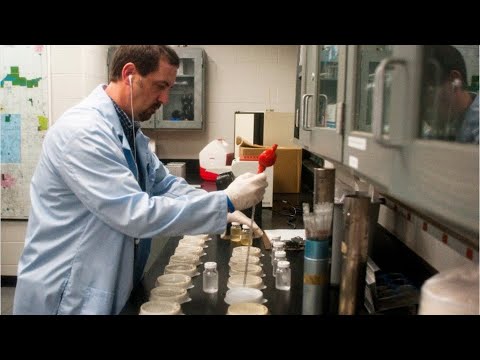
Photo: U.S. Air Force AFRL by Keith C Lewis (Public domain)
Job description
A typical week includes reviewing project reports, meeting with regulators or client stakeholders to explain findings, and making staffing and budget decisions for a lab or research division. Rather than doing hands-on research, a natural sciences manager translates high-level goals into concrete phases of analysis, testing, and reporting, and takes responsibility for hiring, supervising, and evaluating the engineers, technicians, and researchers who do that work. Because the role sits above individual research work, it typically requires years of hands-on experience in a natural science field, and many organizations expect a master's degree or PhD, especially in research-driven settings.
Pros
- Very high pay ceiling (up to $317k) plus strong pay even at entry level
- Faster than average projected job growth (3.7% over the next decade)
- Leadership role directing research and development rather than routine bench work
Cons
- Above-average hours, expect more than a standard 40-hour work week
- Requires significant experience plus often a master's or PhD before reaching the role
- Highly structured work with accountability for both research outcomes and staff
A typical day
The 8:30am pipeline review sets the tone: six research projects at different stages, and the manager's job is deciding which get more people, which get more patience, and which get wound down — a scientist's instincts applied to a budget spreadsheet. Late morning is one-on-ones with two team leads, part mentoring and part obstacle removal, then a hiring decision between finalists for a chemist role. Lunch is eaten during a call with regulatory affairs about a submission timeline. The afternoon brings the part that still feels like science — a data review where the manager pressure-tests a team's conclusions before they go to the executive committee — followed by budget reforecasting and a draft of next year's research priorities. The lab coat hangs by the door, worn rarely, missed sometimes.
Tasks at the job
- Hire, supervise, or evaluate engineers, technicians, researchers, or other staff.
- Design or coordinate successive phases of problem analysis, solution proposals, or testing.
- Plan or direct research, development, or production activities.
- Review project activities and prepare and review research, testing, or operational reports.
- Confer with scientists, engineers, regulators, or others to plan or review projects or to provide technical assistance.
- Develop client relationships and communicate with clients to explain proposals, present research findings, establish specifications, or discuss project status.
Workplace & working conditions
Work happens indoors in a climate-controlled setting, and most of the day is spent sitting at a desk.
You're expected to exercise significant independent judgment day to day. Precision and accuracy are essential to the work, and the work is highly structured, following set procedures. Almost all of the work is done as part of a team.
Education necessary or common
Bachelor's degree plus significant experience; a master's or PhD in a natural science field is common, especially in research-driven organizations
Common college majors
Career path
Related fields
Courses to take
- AP Biology and AP Chemistry — deep science credibility is the foundation of science leadership
- AP Statistics — evaluating other people's data is the daily act
- AP English Language and Composition — decisions travel as memos and presentations
- AP Economics or Business — budgets, tradeoffs, and resource allocation
- AP Calculus — the quantitative backbone
Clubs, activities & competitions
- Science Olympiad or Science Bowl — team science with roles and strategy
- Lead a club or research group project — managing peers is the rarest skill
- Science fair — experience the full arc from question to defended conclusion
- Student government — budget and priority-setting practice
First steps you can take now
- Interview a lab director or R&D manager about what changed when they stopped doing bench science
- Lead one group project this semester and debrief honestly on what leading cost and taught you
- Read how a pharma or ag company structures its R&D pipeline
- Plan for a science degree first — this is a career scientists grow into, so the first step is becoming a good one