Photo: Nolabob (CC BY-SA 4.0)
Job description
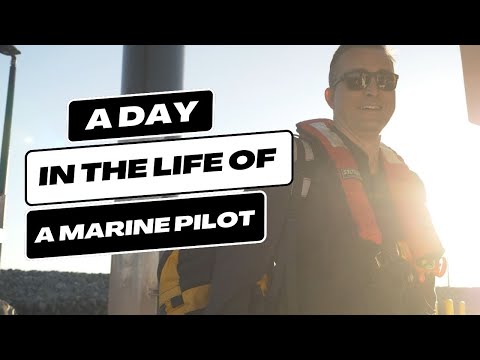
Pilots climb aboard from a small boat, sometimes in darkness, fog, or rough seas, then take the conn from the bridge to guide a vessel through channels, reefs, and other harbor-specific hazards a ship's own crew wouldn't know as well. Because a single misjudged maneuver can cause a grounding, collision, or environmental disaster, the pilot carries full responsibility for the ship's safety during that passage. Schedules run around ship arrivals rather than a fixed clock, and the path in usually runs through years as a ship's captain before specialized local licensing. It's one of the highest-paid maritime careers largely because so few people qualify for the tightly limited pilotage rights on any given harbor.
Pros
- Among the highest-paid maritime careers, with earning potential up to $400k
- Deep local expertise creates real job security through tightly limited pilotage rights
- Highly autonomous, high-respect role directing vessels using specialized navigational skill
Cons
- Requires years of sea experience as a ship's captain before qualifying
- Extremely high-stakes work where one misjudged maneuver risks disaster
- Irregular, on-call schedule driven by ship arrivals, including nights and rough weather
A typical day
A 3am call means a container ship is inbound, so the pilot boards a small pilot boat that races out beyond the breakwater in the dark. The hardest moment comes first: climbing a rope ladder up the moving ship's hull, then heading to the bridge to take the conn. For the next two hours the pilot directs the ship's speed and heading through the channel — reading tide, current, and traffic from memory of a harbor they've studied for years — while coordinating tugboats by radio for the final push to the berth. After docking, there's paperwork, a debrief with dispatch, and rest before the rotation calls again; the job runs on shipping schedules, not office hours.
Tasks at the job
- Board incoming and outgoing ships to guide them safely through harbor channels, reefs, and traffic.
- Communicate with ship captains, tugboats, and port authorities to coordinate vessel movement.
- Monitor tides, currents, weather, and channel depth to time and adjust a ship's approach.
- Direct a ship's speed and heading from the bridge using detailed local navigational knowledge.
- Maintain certification through recurrent training on vessel handling and local waterway conditions.
Workplace & working conditions
Work takes place on the bridges of large ships and small pilot boats used to board and disembark them, often in darkness, fog, or rough seas, including climbing a rope ladder up a moving ship's hull.
The stakes are extremely high, since a single misjudged maneuver risks a grounding, collision, or environmental disaster, and the pilot bears ultimate responsibility for safe passage during their time aboard. Schedules are irregular and driven by ship arrivals, often requiring being on call at odd hours.
Education necessary or common
Merchant Mariner Credential plus extensive sea experience, typically as a ship's captain, followed by specialized local pilotage training and licensing
Common college majors
Licenses & certifications
- Merchant Mariner Credential (USCG) — the foundation of every deck career
- USCG Unlimited Master license — typically required before pilot training
- State or association pilotage license for a specific harbor — the final, hardest credential
Career path
Related fields
Courses to take
- Physics — ship handling is momentum, hydrodynamics, and force problems at giant scale
- Precalculus and Trigonometry — navigation, tides, and turning radii are constant math
- Earth Science or Oceanography — weather, tides, and currents decide every transit
- Geography — chart reading and spatial reasoning are the pilot's core skill
- JROTC (Navy) if offered — early exposure to maritime discipline and navigation
Clubs, activities & competitions
- Sea Scouts or a Coast Guard Auxiliary youth program — real boat handling experience
- Sailing club or competitive sailing team
- Boating safety courses and time on the water in any small craft
- Model UN or debate — bridge command requires calm, clear communication under pressure
First steps you can take now
- Take a free state boating safety course and get real hours on the water this season
- Visit a working port or maritime museum and watch ships being docked with tugs
- Research the maritime academies (like SUNY Maritime, Cal Maritime, or Mass Maritime) and their sea-time programs
- Talk to anyone with a Merchant Mariner Credential — a tugboat crew member, ferry captain, or academy grad — about how deck careers actually progress