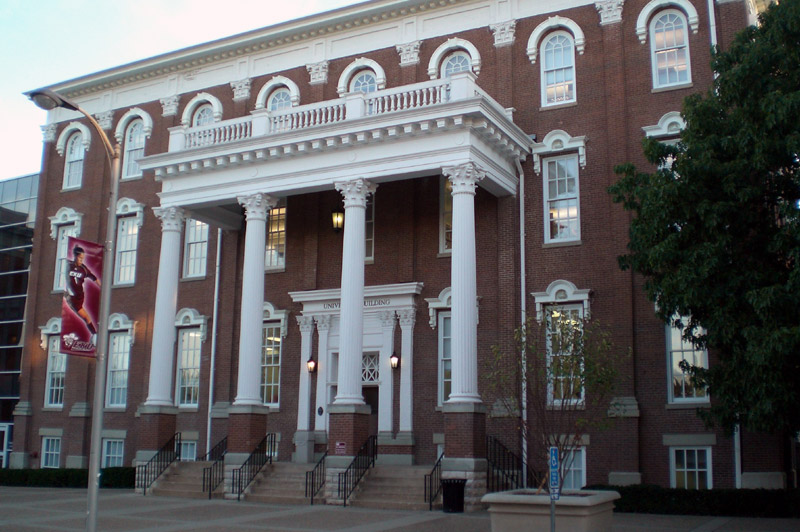
Photo: Alpha 40475 (CC BY-SA 3.0)
School data & stats
Outcomes
Cost
Community
Overview
Eastern Kentucky University began in 1906 as a normal school training teachers for the state's rural counties, and that founding mission, preparing people for concrete public-service careers rather than pure research, still defines the university today. Set in Richmond, a short drive south of Lexington, EKU has grown into a regional comprehensive university serving a broad swath of central and Appalachian Kentucky, including through an extended-campus network that reaches into the eastern part of the state. It's one of Kentucky's comprehensive public universities rather than a flagship research institution, and it wears that identity plainly: practical, accessible, and rooted in place.
Academics
EKU's best-known academic identity is public safety. Its College of Justice & Safety is one of the largest and most established of its kind in the country, with criminal justice, fire protection and safety engineering, and homeland security programs that place graduates directly into state police, federal law enforcement, and fire services. Aviation, with flight training conducted out of the Lexington area, and nursing round out its most recognized professional tracks. Army ROTC is also comparatively strong here, with a Ranger Challenge team that carries a solid, long-standing reputation within ROTC circles. Coursework across these fields is applied and certification-minded, with faculty who often arrive from careers in the fields they teach.
Campus & student life
Richmond is a small city with a traditional, walkable public-university campus at its center, close enough to Lexington for weekend trips but distinctly its own town day to day. EKU competes in NCAA Division I athletics, with football and basketball drawing steady regional interest, though the school's identity leans more on program pride, especially within justice and safety and ROTC, than on big-time sports culture. A significant share of students come from the surrounding Appalachian counties, and many are first-generation college students, giving campus a grounded, unpretentious feel.
Getting in
Admission is comparatively accessible relative to the flagship options in the state, and the process weighs demonstrated readiness for a specific professional track, particularly in justice and safety, nursing, or aviation, more than an elite, essay-driven application. Regional students who might not otherwise look far from home make up a large share of the applicant pool, and EKU markets itself directly to that population.
After graduation
The justice and safety pipeline is EKU's clearest outcomes story: graduates move directly into state police academies, county and municipal fire departments, and federal agencies, several of which recruit specifically from EKU's programs. Nursing and aviation graduates likewise tend toward direct regional employment, and the alumni network carries real weight within Kentucky's public-safety and law-enforcement institutions specifically, even where the university's broader national name recognition is modest.
Worth knowing
EKU's Army ROTC program has a reputation disproportionate to the university's overall national profile, and prospective cadets should know it's treated as a serious point of pride here. The extended-campus system reaching into eastern Kentucky also means EKU functions, in practice, as a regional access point for parts of Appalachia that a traditional single-campus university wouldn't otherwise reach.
Admissions
Deadlines (2026–27 cycle)
Applying
eku.edu ↗High school coursework
Required4 credits of language arts (English I-IV) · 3 credits of mathematics (including Algebra I, Geometry or Algebra II) · 3 credits of science (including lab-based investigation) · 3 credits of social studies · 1 credit of history and appreciation of visual and performing arts · 1/2 credit of health · 1/2 credit of physical education · 2 levels of the same world language (or completed at EKU)
Your fit, with your own numbers
With a free Dorado account, this tab fills in from your own profile and course plan:
- A chance band (Far Reach to Likely) calibrated against real admitted-student data — published test-score ranges and, where a school reports them, Common Data Set GPA profiles — with plain-English reasons.
- A fit breakdown across testing, grades, course rigor, activities, and honors, side by side with the numbers the school publishes.
- Deadline countdowns where verified application dates are on file.
Creating an account is free and takes no card — college search, list tracking, and fit are all included.
Create your free account