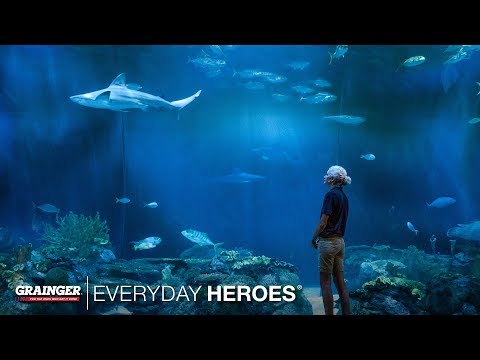
Photo: Fred Hsu (Wikipedia:User:Fredhsu on en.wikipedia) (CC BY-SA 3.0)
Job description
Daily rounds usually include testing and adjusting water chemistry, temperature, and filtration systems, since exhibit animals depend entirely on getting that balance right. Feeding varies species by species, and aquarists often dive or wade directly into large tanks to clean glass, inspect animals up close, and maintain the exhibit itself. New or sick animals get quarantined and treated under veterinary guidance, and everything from water readings to feeding logs gets tracked carefully over time. Many facilities now expect a bachelor's degree in marine biology or a related field, plus scuba certification, given how much of the job happens in and around water.
Pros
- Direct hands-on work caring for marine animals and maintaining exhibits
- Often includes scuba diving and dive shows as a regular part of the job
- Structured daily schedule of testing and feeding provides predictable routine
Cons
- Pay tops out around $60k, modest for a role increasingly requiring a bachelor's degree
- Regular exposure to cold water, wet floors, and water-treatment chemicals
- Urgent equipment failures or sick animals can demand immediate response outside routine hours
A typical day
Water quality comes before coffee finishes: testing ammonia, nitrite, pH, and salinity across a dozen systems, because invisible chemistry kills faster than anything visible. Then food prep — chopping restaurant-quality seafood, gut-loading feeder items, thawing krill — followed by target-feeding a reef tank where the shy anthias must eat before the greedy tangs take everything. Mid-morning might mean suiting up for a dive in the big exhibit, scrubbing acrylic while a grouper supervises. Afternoons hold quarantine-room care for new arrivals, exhibit maintenance, record-keeping on every animal, and maybe a behind-the-scenes tour to narrate. Weekends and holidays included; fish don't observe them.
Tasks at the job
- Monitor and adjust water chemistry, temperature, and filtration systems to keep tanks healthy.
- Feed fish, invertebrates, and other aquatic animals according to species-specific needs.
- Dive or wade into large tanks to clean glass, maintain exhibits, and inspect animal health.
- Quarantine and treat new or sick animals under veterinary guidance.
- Maintain records of water quality, feeding, and animal health for each exhibit.
Workplace & working conditions
Work happens around large tanks and behind-the-scenes life-support systems, often involving scuba diving or wading into cold water, and regular exposure to wet floors, chemicals used for water treatment, and heavy equipment.
The work runs on a structured daily schedule of testing and feeding, punctuated by urgent responses to equipment failures or sick animals that can't wait. Physical stamina and comfort in and around water are essential parts of the job.
Education necessary or common
Bachelor's degree in marine biology, aquatic science, or a related field is increasingly expected
Common college majors
Licenses & certifications
- SCUBA certification (open water, then rescue diver — widely required)
- AALSO water-quality certifications (on the job)
Career path
Related fields
Courses to take
- AP Biology — physiology, ecology, and disease
- Chemistry — water chemistry is the daily craft
- Marine Science if your school offers it
- AP Environmental Science
- Algebra II — dosing and system-volume calculations
Clubs, activities & competitions
- Marine biology or aquarium club (or start a school aquarium)
- Science Olympiad (Water Quality event is directly relevant)
- Volunteer at a public aquarium or zoo
- 4-H or envirothon teams
First steps you can take now
- Keep a home aquarium impeccably and log water parameters weekly like a professional
- Volunteer at your nearest aquarium — youth programs are the standard entry
- Get SCUBA certified (open-water certification is possible at 15 with junior programs, and aquarist jobs expect it)
- Interview an aquarist about how they got their first paid role