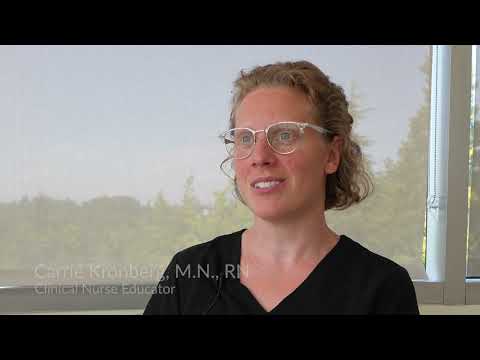
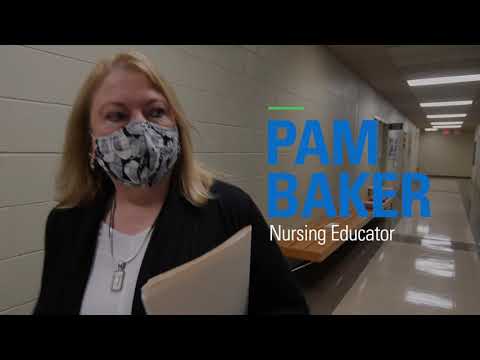
Photo: Germanna CC (CC BY 2.0)
Job description
Beyond lecturing, nursing instructors supervise students directly in labs and clinical rotations, making sure hands-on patient care skills are being learned correctly and safely. They build course materials, grade exams, and lead classroom discussions, while also staying current on nursing practice through journals, conferences, and professional contacts so what they teach doesn't go stale. The role calls for real independent judgment about students' clinical readiness and occasional friction with frustrated students or facility staff, all within the structured rhythm of an academic term. A doctorate in nursing (PhD or DNP) plus solid clinical experience is typically required, and demand for these instructors is growing quickly as nursing programs try to keep up with a persistent nursing shortage.
Pros
- Much faster than average projected growth (16.8%) amid strong demand for nursing faculty
- Large field with 8,600 positions nationwide, more openings than most academic teaching specialties
- Combines clinical supervision with classroom teaching, keeping skills grounded in real patient care
Cons
- Above-average hours, expect more than a standard 40-hour work week
- Requires a doctorate (PhD or DNP) plus prior clinical experience, a long combined path
- Precision-critical supervision of students' clinical work carries real patient-safety stakes
A typical day
The 8am lecture on cardiac pharmacology took three hours to prepare for its seventy-five minutes, and today it lands well — a case study about a deteriorating patient turns passive listeners into a room full of clinical arguments. Late morning is office hours: one student in tears over a failed med-surg exam gets both honesty and a study plan. The afternoon moves to the hospital, where the instructor supervises eight students through a clinical rotation — hovering at the medication cart during a supervised med pass, debriefing a student who froze during a code, and modeling the calm a nursing student borrows until they grow their own. Grading care plans and a curriculum-committee meeting on simulation hours fill the gaps. The nursing shortage begins or ends in rooms like these, and the instructor knows it.
Tasks at the job
- Supervise students' laboratory and clinical work.
- Initiate, facilitate, and moderate classroom discussions.
- Assess clinical education needs and patient and client teaching needs using a variety of methods.
- Compile, administer, and grade examinations, or assign this work to others.
- Prepare course materials, such as syllabi, homework assignments, and handouts.
- Keep abreast of developments in the field by reading current literature, talking with colleagues, and participating in professional conferences.
Workplace & working conditions
Work happens indoors in a climate-controlled setting.
There's a regular, moderate amount of time pressure, and you're expected to exercise significant independent judgment day to day. Precision and accuracy are essential to the work, and the work is highly structured, following set procedures. You'll regularly deal with frustrated or upset people as part of the job, and almost all of the work is done as part of a team.
Education necessary or common
Doctorate in nursing (PhD or DNP), plus clinical experience
Common college majors
Licenses & certifications
- Registered Nurse (RN) license
- Certified Nurse Educator (CNE)
Career path
Related fields
Courses to take
- AP Biology — the base of the nursing knowledge you'll someday teach
- AP Chemistry — pharmacology and physiology prerequisites
- Anatomy and Physiology — the discipline's daily content
- AP Psychology — how people learn is the second half of teaching
- AP English Language and Composition — lectures, feedback, and scholarship all run on writing
Clubs, activities & competitions
- Peer tutoring — teaching is a skill you can start building today
- HOSA-Future Health Professionals — clinical events and mentoring roles
- Hospital volunteering with patient contact
- TA or lab-assistant role for a science teacher
First steps you can take now
- Tutor a younger student in science this semester and study what makes explanations work
- Follow the path's shape: BSN, years of clinical practice, then graduate school — great nursing teachers are great nurses first
- Interview a nurse about who taught them best and why
- Get CPR certified and look into CNA certification for early clinical experience