Photo: Vincenzo Mainardi (CC BY-SA 3.0)
Job description
Feeding, dressing, and keeping kids safe is only part of the job; childcare workers also actively support a child's emotional and social growth, encouraging empathy and a positive sense of self. That includes teaching everyday habits like proper eating and toileting routines, reading aloud, and leading simple art, craft, and music activities. The role requires constant close contact with children and coworkers and often involves managing upset kids or parents, all as part of a team. It typically requires only a high school diploma plus on-the-job training, though pay is modest, generally in the $24,000 to $46,000 range.
Pros
- Low barrier to entry: a high school diploma plus on-the-job training is enough to start
- Directly shapes early childhood development through daily teaching, play, and emotional support
- Large existing workforce (160,200 jobs) means openings are common across many settings
Cons
- Employment is projected to shrink slightly (-2.9%) over the next decade
- Entry-level pay is low, with a ceiling under $46k even at the high end
- Regularly manages upset children and parents while exercising independent judgment under time pressure
A typical day
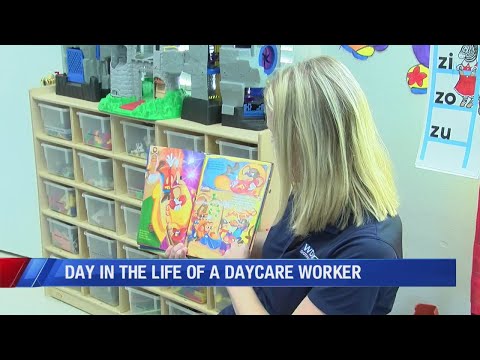
Arrival beats the kids: setting out breakfast, wiping down tables, and checking the day's activity plan before the first drop-off at 7:30. The morning cycles through circle time, a craft that ends with glue on someone's sleeve, diaper changes or bathroom trips, and a playground stretch where you count heads constantly. Nap time is the one quiet window — used for sanitizing toys and jotting notes for parents about who ate what and who bit whom. Pickup time means a quick summary for each parent, then resetting the room to do it all again tomorrow.
Tasks at the job
- Sanitize toys and play equipment.
- Maintain a safe play environment.
- Observe and monitor children's play activities.
- Support children's emotional and social development, encouraging understanding of others and positive self-concepts.
- Instruct children in health and personal habits, such as eating, resting, and toilet habits.
- Read to children and teach them simple painting, drawing, handicrafts, and songs.
Workplace & working conditions
Work happens indoors in a climate-controlled setting, and you work in close physical proximity to coworkers or the public for much of the shift.
There's a regular, moderate amount of time pressure, and you're expected to exercise significant independent judgment day to day. You'll regularly deal with frustrated or upset people as part of the job, and almost all of the work is done as part of a team.
Education necessary or common
High school diploma; some on-the-job training or apprenticeship
Licenses & certifications
- Pediatric CPR/First Aid
- Child Development Associate (CDA) credential
- State childcare licensing/background check requirements
Career path
Related fields
Courses to take
- Child Development — many high schools offer it, and it maps directly onto this work
- Health — nutrition, safety, and first-aid fundamentals
- Psychology — how young kids think, attach, and act out
- English — you'll write daily reports and talk with parents constantly
- Art or Music — activity ideas come straight from these classes
Clubs, activities & competitions
- FCCLA (Family, Career and Community Leaders of America) — has early-childhood competitive events
- Babysitting, nursery volunteering at a church or community center
- Camp counselor or junior counselor work in the summer
- Tutoring or reading-buddy programs with elementary schoolers
First steps you can take now
- Get certified in pediatric CPR and first aid through the Red Cross
- Ask a local daycare or preschool if they take teen volunteers or part-time aides
- Start a regular babysitting gig and treat it professionally — planned activities, notes for parents
- Look up your state's childcare worker requirements to see what training centers expect