Photo: Official U.S. Navy Page from United States of America (Public domain)
Job description
Much of the job is diagnostic: reviewing a patient's history, symptoms, and test results to figure out what's going on, then building a treatment plan grounded in clinical guidelines rather than guesswork. Nurse practitioners prescribe medication, adjusting dosage for factors like age and other health conditions, and handle everything from routine prevention counseling to complex, unstable, or emergency cases in collaboration with other providers. The pace is fast and the stakes are real, so the work stays highly structured and team-based rather than freewheeling. It requires a Master's or Doctor of Nursing Practice degree, pays roughly $101,000 to $174,000, and is one of the fastest-growing roles in healthcare as more primary and specialty care shifts toward NPs.
Pros
- Explosive projected job growth (40.1%), among the fastest-growing roles in healthcare
- Strong pay even at the entry level, up to $174k at the top
- Can diagnose, treat, and prescribe independently in many states without a full medical degree
Cons
- Above-average hours, more than a standard 40-hour work week
- Fast-paced, high-stakes work where mistakes carry serious consequences
- Regularly manages complex, unstable, or emergency cases alongside other providers
A typical day
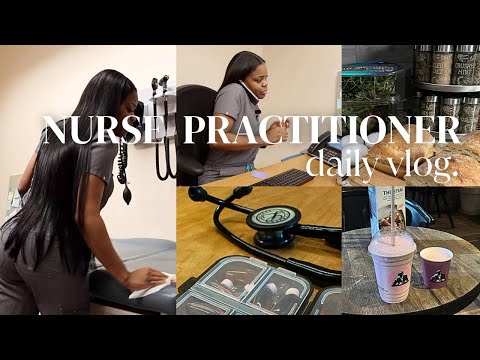
The first patient at 8am is a diabetic follow-up, and the NP handles it end to end: reviewing glucose logs, adjusting medication, ordering labs, and coaching through a diet setback without judgment. The morning runs eighteen patients deep in a family practice rhythm — an ear infection, a sports physical, a rash that might be shingles, an anxious college student needing both a listener and a treatment plan. The NP diagnoses, prescribes, and refers under their own authority in many states, and consults a collaborating physician on one complex case because good clinicians know their edges. Lunch is a lunch-and-learn on new hypertension guidelines. The afternoon adds a procedure — a skin lesion biopsied — plus results review, patient portal messages, and the documentation that follows every clinician home in spirit if not in fact.
Tasks at the job
- Maintain complete and detailed records of patients' health care plans and prognoses.
- Develop treatment plans, based on scientific rationale, standards of care, and professional practice guidelines.
- Provide patients with information needed to promote health, reduce risk factors, or prevent disease or disability.
- Analyze and interpret patients' histories, symptoms, physical findings, or diagnostic information to develop appropriate diagnoses.
- Diagnose or treat complex, unstable, comorbid, episodic, or emergency conditions in collaboration with other health care providers as necessary.
- Prescribe medication dosages, routes, and frequencies, based on such patient characteristics as age and gender.
Workplace & working conditions
Work happens indoors in a climate-controlled setting, and you work in close physical proximity to coworkers or the public for much of the shift. Standard safety equipment like gloves or safety glasses is commonly worn.
The pace is often fast, with real time pressure to meet deadlines, and you're expected to exercise significant independent judgment day to day. Mistakes can have serious consequences, so accuracy matters a lot, and the work is highly structured, following set procedures. You'll regularly deal with frustrated or upset people as part of the job, and almost all of the work is done as part of a team.
Education necessary or common
Master of Science in Nursing (MSN) or Doctor of Nursing Practice (DNP)
Common college majors
Licenses & certifications
- Registered Nurse (RN) license
- National NP board certification (e.g. FNP-BC or FNP-C)
- State APRN licensure and prescriptive authority
Career path
Related fields
Courses to take
- AP Biology — the nursing-school foundation
- AP Chemistry — pharmacology's prerequisite chain
- Anatomy and Physiology — the daily map of practice
- AP Psychology — half of primary care is behavior and mental health
- AP Statistics — reading studies and guidelines critically
Clubs, activities & competitions
- HOSA-Future Health Professionals — nursing events and clinical exposure
- Hospital or clinic volunteering with patient contact
- Red Cross club — CPR and health services
- Peer health or wellness education programs
First steps you can take now
- Get CPR/BLS certified this month
- Shadow an NP — family practices often say yes to polite student requests
- Compare the NP path (BSN, RN experience, MSN/DNP) with the PA and MD paths to choose deliberately
- Look into CNA certification through your school district — some students graduate with it and start patient care immediately