Photo: Marcy Sanchez (Public domain)
Job description
Treatment can include prescribing psychotropic medication where state regulations allow, administering psychotherapy, and distinguishing between conditions rooted in physiology versus psychology to land on the right diagnosis. Along the way, these nurses document detailed histories, physical assessments, and treatment plans, and spend real time educating patients and family members about a diagnosis, its medications, and what treatment will involve. The pace is often fast with real deadline pressure, and since patients may be in genuine distress, the role calls for both clinical precision and the composure to work with frustrated or upset people.
Pros
- Large, steady field with well over 189,000 related nursing jobs nationally
- Faster than average projected job growth (4.9%)
- Prescriptive authority over psychotropic medication in most states, unusual clinical autonomy for a nursing role
Cons
- Above-average hours, more than a standard 40-hour work week
- Fast-paced role with real time pressure to meet deadlines
- Regularly works with patients in psychiatric crisis or distress, emotionally demanding
A typical day
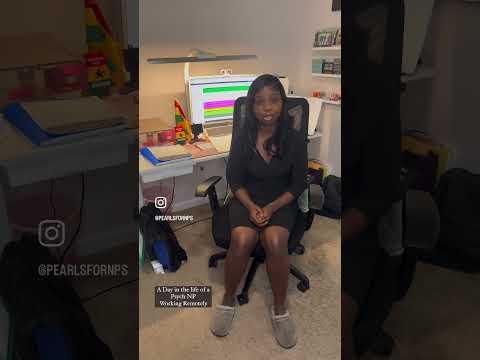
The schedule is a run of 30- and 60-minute appointments: a 9am medication check with a college student whose antidepressant needs adjusting, a 10am intake for new-onset panic attacks, then a longer session combining therapy and prescribing decisions for a patient with bipolar disorder. Between visits the PMHNP returns a pharmacy call, reviews lab results that rule out a thyroid cause, and messages a therapist to coordinate care. Afternoon may bring a telehealth block — psychiatry moved online faster than most specialties. Charting is constant, careful, and legally consequential.
Tasks at the job
- Diagnose psychiatric disorders and mental health conditions.
- Document patients' medical and psychological histories, physical assessment results, diagnoses, treatment plans, prescriptions, or outcomes.
- Educate patients and family members about mental health and medical conditions, preventive health measures, medications, or treatment plans.
- Write prescriptions for psychotropic medications as allowed by state regulations and collaborative practice agreements.
- Evaluate patients' behavior to formulate diagnoses or assess treatments.
- Distinguish between physiologically- and psychologically-based disorders, and diagnose appropriately.
Workplace & working conditions
Work happens indoors in a climate-controlled setting, and most of the day is spent sitting at a desk.
The pace is often fast, with real time pressure to meet deadlines, and you're expected to exercise significant independent judgment day to day. Precision and accuracy are essential to the work. You'll regularly deal with frustrated or upset people as part of the job.
Education necessary or common
Master of Science in Nursing (MSN) or Doctor of Nursing Practice (DNP), plus psychiatric nurse practitioner certification
Common college majors
Licenses & certifications
- RN license (NCLEX-RN)
- PMHNP-BC board certification
- State APRN licensure with prescriptive authority
Career path
Related fields
Courses to take
- AP Psychology — the obvious start, and genuinely foundational
- Anatomy & Physiology — prescribing requires knowing the body cold
- AP Biology
- Chemistry — psychopharmacology is chemistry applied to mood
- AP English Language — clinical notes and patient communication
Clubs, activities & competitions
- HOSA — Future Health Professionals
- Peer counseling or a mental-health awareness club (bring NAMI programming to your school)
- Volunteer at a hospital or crisis-line support role open to teens
- Get certified in Mental Health First Aid (teen version exists)
First steps you can take now
- Take a teen Mental Health First Aid course
- Volunteer with a crisis text line or NAMI affiliate program that accepts high schoolers
- Shadow a nurse — psychiatric units rarely allow shadowing, so start with any nursing exposure
- Map the pathway: BSN, RN experience, then PMHNP graduate program — write out the years honestly