Photo: Lt.Cmdr. Jesse Ehrenfeld (Public domain)
Job description
A typical day moves between gathering patient history, reviewing test results, and building an individualized treatment plan, then adjusting it as therapy or medication takes effect. Psychiatrists lean heavily on colleagues, consulting with psychologists, social workers, and psychiatric nurses, especially when a patient's conditions overlap or resist a simple fix. Many eventually narrow their focus into a subspecialty such as child and adolescent psychiatry, addiction medicine, or forensic psychiatry. Despite treating mental health, the work itself is mostly desk-based: reading charts and writing notes rather than performing hands-on procedures.
Pros
- High upside earning potential, up to $447k at the top of the range
- Faster than average projected job growth (6.1%)
- Combines medical training with psychotherapy and medication management, a uniquely broad toolkit
Cons
- Requires medical school plus residency in the specialty, one of the longest training paths available
- A relatively small number of positions nationwide, so opportunities may be geographically limited
- Regularly works with patients in significant emotional or psychiatric distress
A typical day
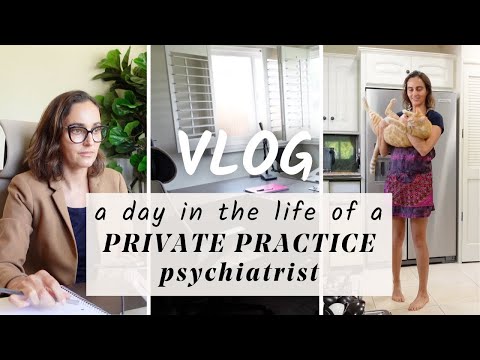
Hospital mornings start with rounds on the inpatient unit: reviewing overnight notes, meeting each patient briefly, adjusting a medication where the side effects outweigh the gains, and huddling with nurses, social workers, and techs on discharge planning. Late morning brings a new-patient evaluation — an hour of careful history where diagnosis is built from listening, not labs. The afternoon shifts to outpatient follow-ups in 20-30 minute blocks: a college student's antidepressant response, a bipolar patient's sleep pattern, a therapy-plus-medication case where the psychiatrist provides both. Between patients: charting, a call with a family, and a consult request from the ER that may extend the day.
Tasks at the job
- Prescribe, direct, or administer psychotherapeutic treatments or medications to treat mental, emotional, or behavioral disorders.
- Gather and maintain patient information and records, including social or medical history obtained from patients, relatives, or other professionals.
- Design individualized care plans, using a variety of treatments.
- Collaborate with physicians, psychologists, social workers, psychiatric nurses, or other professionals to discuss treatment plans and progress.
- Analyze and evaluate patient data or test findings to diagnose nature or extent of mental disorder.
- Examine or conduct laboratory or diagnostic tests on patients to provide information on general physical condition or mental disorder.
Workplace & working conditions
Work happens indoors in a climate-controlled setting, and most of the day is spent sitting at a desk.
The pace is often fast, with real time pressure to meet deadlines, and you're expected to exercise significant independent judgment day to day. The work is highly structured, following set procedures. You'll regularly deal with frustrated or upset people as part of the job, and almost all of the work is done as part of a team.
Education necessary or common
Doctor of Medicine (MD) or Doctor of Osteopathic Medicine (DO), plus residency training in the specialty
Common college majors
Licenses & certifications
- MD or DO license (state medical board)
- American Board of Psychiatry and Neurology certification
- DEA registration for prescribing
Career path
Related fields
Courses to take
- AP Biology — pre-med foundation
- AP Chemistry — medical school prerequisites
- AP Psychology — the specialty's subject matter, previewed
- Anatomy & Physiology — neuroscience starts with the brain's biology
- AP English Language — psychiatry is a listening-and-writing-heavy specialty
Clubs, activities & competitions
- HOSA (Future Health Professionals)
- Peer counseling or peer support programs
- Volunteer at a hospital or with NAMI events
- Science Olympiad or Brain Bee — neuroscience competition
First steps you can take now
- Compete in or study for the Brain Bee, the international neuroscience competition for high schoolers
- Take a Mental Health First Aid course
- Shadow any physician — psychiatry shadowing often becomes available in college
- Read one psychiatrist's memoir to see the field honestly