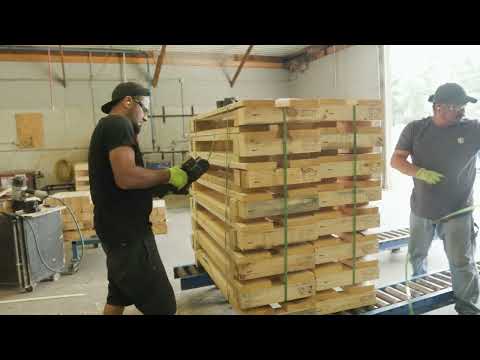
Photo: Joe Clark (Public domain)
Job description
The build starts with reading blueprints or spec manuals to plan the sequence, then positioning and aligning components, sometimes with a hoist for heavier parts, and verifying everything meets spec using calipers, gauges, and micrometers. Assemblers set precise clearances between moving parts and fasten or install piping, wiring, and fixtures to complete each subassembly, finishing with work like smoothing rough spots or trimming parts to fit before the machine ships. The specific end product, whether an engine, turbine, or other machine, depends on which industry the employer serves.
Pros
- Pay ceiling near $78k achievable with just a high school diploma and on-the-job training
- Precision assembly work using measuring instruments like calipers, gauges, and micrometers
- Hands-on building of complete engines and machines rather than a single repetitive step
Cons
- Employment is projected to shrink sharply over the next decade (-21.1%)
- A relatively small number of positions nationwide, so opportunities may be geographically limited
- Fast-paced work where precision and accuracy are essential to avoid costly assembly errors
A typical day
The shift begins at a workstation stocked with torque wrenches, micrometers, and a build sheet for the day's engines. Assembly is sequenced and exact: seat the crankshaft, check bearing clearances with plastigage, torque each bolt to spec in the printed order, initial the traveler card. Mid-shift a block fails a clearance check and the assembler flags it for machining rather than forcing it — knowing when not to build is the skill. The afternoon might bring a hoist-assisted marriage of engine halves, a test-stand run, and the quiet satisfaction of hearing something you built fire up.
Tasks at the job
- Read and interpret assembly blueprints or specifications manuals, and plan assembly or building operations.
- Position or align components for assembly, manually or using hoists.
- Set and verify parts clearances.
- Verify conformance of parts to stock lists or blueprints, using measuring instruments such as calipers, gauges, or micrometers.
- Fasten or install piping, fixtures, or wiring and electrical components to form assemblies or subassemblies, using hand tools, rivet guns, or welding equipment.
- Remove rough spots and smooth surfaces to fit, trim, or clean parts, using hand tools or power tools.
Workplace & working conditions
Work happens indoors, though not always in a climate-controlled space, and most of the day is spent on your feet. Noise levels can be distracting or uncomfortable. The role involves regular exposure to hazardous equipment or conditions and contaminants, and standard protective equipment (gloves, safety glasses, and similar) is expected.
The pace is often fast, with real time pressure to meet deadlines. Precision and accuracy are essential to the work.
Education necessary or common
High school diploma; some on-the-job training or apprenticeship
Licenses & certifications
- OSHA 10
- Forklift/hoist operator certification (employer-provided)
- ASE certifications if the path bends toward repair work
Related fields
Courses to take
- Auto Shop or Small Engines — direct hands-on preparation
- Metals/Machine Shop — precision measurement and fits
- Geometry — tolerances and clearances are geometry in the flesh
- Physics — compression, combustion, and torque all obey it
- Blueprint Reading or Drafting/CAD if offered — assemblers live by drawings
Clubs, activities & competitions
- SkillsUSA — automotive and manufacturing competitions
- Rebuild a small engine (lawnmower, dirt bike) as a personal project
- FFA — many chapters include ag mechanics
- A part-time job at a repair shop or parts store
First steps you can take now
- Tear down and reassemble a lawnmower engine using a factory manual
- Learn to read a torque spec sheet and use a torque wrench properly
- Visit a community college machining or automotive program open house
- Ask a local engine builder or machine shop if you can sweep floors and watch