Photo: National Archives and Records Administration (Public domain)
Job description
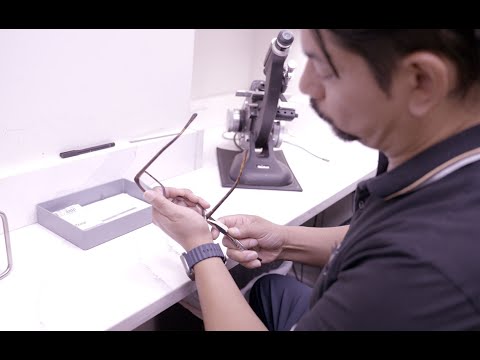
The process starts with inspecting lens blanks for flaws and checking surface smoothness and coating thickness, then shaping lenses so they fit their frames precisely. Technicians mount and align finished lenses using precision hand tools, adjust frames for correct fit, and assemble pieces like nose pads and temple pieces with pliers, screwdrivers, and drills. The pace is often fast with real deadlines to hit, and the work follows tightly structured procedures on your feet in a lab setting.
Pros
- Faster than average projected job growth (2.3%) with steady demand from optical retailers
- Precision hands-on craft work grinding and mounting lenses to exact specifications
- Entry with just a high school diploma and on-the-job training
Cons
- A relatively small, geographically limited occupation nationwide
- Fast-paced, highly structured production work with real deadline pressure
- Frequent interaction with frustrated customers awaiting lens or frame corrections
A typical day
The morning tray holds today's first twenty jobs, each a prescription and a frame. The first lens blank goes onto the blocker, then the generator cuts the curve while the tech monitors for chatter; edging follows, shaping the lens to trace data captured from the frame. Progressive lenses demand the most care — axis and seg height checked twice, because a millimeter off means headaches for a stranger. Mid-morning the lensometer catches one job out of tolerance; it gets remade without debate, since the machine's time is cheaper than a patient's trust. The afternoon adds tinting, anti-reflective coating prep, drilling a rimless mount with a steady hand, and final inspection — each finished pair cleaned, verified against its order, and sealed for pickup. Quiet, precise, satisfying production, twenty small optical instruments a day.
Tasks at the job
- Shape lenses appropriately so that they can be inserted into frames.
- Clean finished lenses and eyeglasses, using cloths and solvents.
- Inspect lens blanks to detect flaws, verify smoothness of surface, and ensure thickness of coating on lenses.
- Mount, secure, and align finished lenses in frames or optical assemblies, using precision hand tools.
- Adjust lenses and frames to correct alignment.
- Assemble eyeglass frames and attach shields, nose pads, and temple pieces, using pliers, screwdrivers, and drills.
Workplace & working conditions
Work happens indoors in a climate-controlled setting, and most of the day is spent on your feet. Noise levels can be distracting or uncomfortable. The role involves regular exposure to contaminants.
The pace is often fast, with real time pressure to meet deadlines. The work is highly structured, following set procedures. You'll regularly deal with frustrated or upset people as part of the job.
Education necessary or common
High school diploma; some on-the-job training or apprenticeship
Licenses & certifications
- ABO certification (optician credential, valuable for advancement)
Career path
Related fields
Courses to take
- Physics — optics is the trade's entire science
- Geometry — curves, axes, and measurements all day
- Algebra II — prescription math and conversions
- Machine Shop or any precision CTE course — machine setup and finishing skills
- Health Science courses — the clinical context of vision care
Clubs, activities & competitions
- SkillsUSA — precision production competitions
- Science Olympiad — optics events appear regularly
- Model building, jewelry making, or other fine-handwork hobbies
- Part-time work at an optical retailer
First steps you can take now
- Ask an optical shop with an in-house lab to show you a lens made start to finish — one-hour labs do it while you watch
- Learn how lens prescriptions work (sphere, cylinder, axis) from free optician study guides
- Practice fine motor precision with a hands-on hobby this month
- Look into optical laboratory technician openings — many train from zero and promote quickly