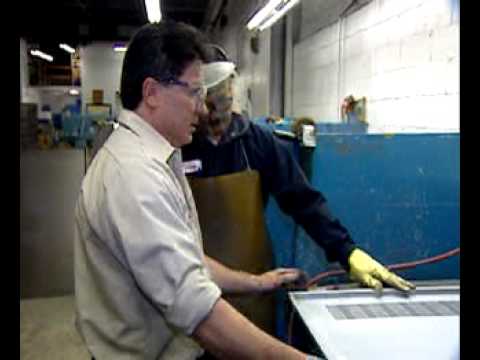
Photo: Colowokanga (CC BY-SA 4.0)
Job description
Using hand tools and hand-held power tools, workers grind, sand, or polish a piece to correct defects or prepare its surface for further finishing, then trim, scrape, or deburr it with chisels and scrapers as needed. Quality checks are constant: finished pieces get compared to templates, measured, and sometimes tested in working machinery, with defects like knotholes or cracks marked for repair. The pace is often fast with real deadline pressure, and the role covers a wide range of materials, from metal and plastic to wood, stone, and glass, in settings where standard protective equipment is expected.
Pros
- Entry with just a high school diploma and on-the-job training, no prior experience needed
- Hands-on finishing work across varied materials: metal, wood, stone, and glass
- Climate-controlled indoor work environment
Cons
- Employment is projected to shrink sharply over the next decade (-21.2%)
- A relatively small, geographically limited occupation nationwide
- Fast-paced production work with real deadline pressure and hazardous equipment exposure
A typical day
The morning starts at the workbench, inspecting a rack of cast metal parts under bright task lighting for burrs and rough seams left by the mold. Most of the day is spent with files, emery cloth, and handheld pneumatic grinders, working each piece until fingertips confirm what the eye can't see — a surface smooth enough to pass inspection. Around midday a batch of stone countertop edges arrives needing hand-polishing where the machines can't reach. The work is rhythmic and physical, with safety glasses and a dust mask on for hours at a stretch, and the afternoon closes with wiping down finished pieces and logging which ones passed quality check.
Tasks at the job
- Verify quality of finished workpieces by inspecting them, comparing them to templates, measuring their dimensions, or testing them in working machinery.
- Grind, sand, clean, or polish objects or parts to correct defects or to prepare surfaces for further finishing, using hand tools and power tools.
- Measure and mark equipment, objects, or parts to ensure grinding and polishing standards are met.
- Trim, scrape, or deburr objects or parts, using chisels, scrapers, and other hand tools and equipment.
- Mark defects, such as knotholes, cracks, and splits, for repair.
- Study blueprints or layouts to determine how to lay out workpieces or saw out templates.
Workplace & working conditions
Work happens indoors in a climate-controlled setting, and most of the day is spent on your feet. Noise levels can be distracting or uncomfortable. The role involves regular exposure to hazardous equipment or conditions and contaminants, and standard protective equipment (gloves, safety glasses, and similar) is expected.
The pace is often fast, with real time pressure to meet deadlines.
Education necessary or common
High school diploma; some on-the-job training or apprenticeship
Licenses & certifications
- OSHA 10-Hour General Industry — respected proof you know shop safety
- NIMS credentials (optional) — machining-adjacent certification some employers value
Related fields
Courses to take
- Woodshop or Metal Shop — direct hands-on practice with the tools and materials of the trade
- Introduction to Manufacturing or Industrial Arts — covers abrasives, finishing, and shop safety
- Geometry — reading tolerances and understanding surface angles comes up constantly
- Art or Sculpture — trains the eye and hand for judging surface quality
- Physical Education — the job demands stamina and steady hands
Clubs, activities & competitions
- SkillsUSA — compete in precision machining or cabinetmaking events
- A part-time job or helper role at a machine shop, monument company, or countertop fabricator
- Metalworking or woodworking club, or building your own finishing projects at home
- Robotics team — builds comfort with fabrication and finishing parts
First steps you can take now
- Ask a local machine shop, jewelry maker, or stone fabricator if you can tour the shop and watch finishing work
- Pick up a set of files and sandpaper grits and practice finishing a small metal or wood project to a mirror surface
- Take your school's shop class or a community-center metalworking course
- Watch professional finishing and polishing tutorials to learn grit progressions and technique