Photo: NASA Glenn Research Center (Public domain)
Job description
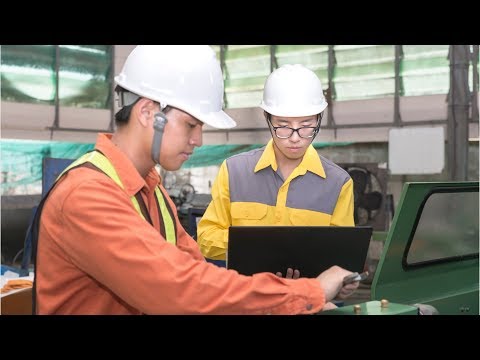
Much of the day is spent reviewing blueprints and specs, calculating what capacity a system needs to hit its performance target, then running it through tests to see if it actually does. Technicians read gauges and meters to track how a part performs under real conditions, such as temperature, voltage, or amperage, adjust or redesign anything that falls short, and write up results for the engineering team. The role shows up constantly in manufacturing plants and product-testing labs, often with noise and safety gear (gloves, safety glasses) part of the daily routine, and technicians tend to specialize in one type of machinery or test process over time.
Pros
- Only vocational training, apprenticeship, or an associate's degree is required, not a four-year degree
- Pay can reach $106k+ for experienced technicians, strong upside without a bachelor's degree
- Hands-on testing and troubleshooting work translating designs into working machinery
Cons
- Above-average hours (40-50/week) common in fast-paced testing schedules
- No projected job growth over the next decade, a flat outlook for the field
- Fast pace with real time pressure to meet testing and reporting deadlines
A typical day
The prototype test stand is the morning's world: a new pump design needs its performance curve mapped, and the technician builds the loop — sensors plumbed and calibrated, data acquisition configured, safety relief checked — then runs the matrix point by point, flow against pressure, logging steady-state data an engineer will trust because the setup was honest. A bearing temperature trends odd at the fifth point, and the technician's notes capture exactly when and how (anomalies documented today save weeks later). The afternoon shifts to the build bench: a redesigned bracket assembled onto the test article, torque wrench and thread-locker to spec, then instrumentation for next week's vibration test. A drawing discrepancy surfaces — the hole pattern doesn't match the mating part — and the technician red-flags it to the engineer with measurements attached. The lab's rhythm closes the day: calibration stickers checked, data backed up, the stand secured. The engineer owns the theory; the technician owns the truth of what the hardware actually did.
Tasks at the job
- Calculate required capacities for equipment of proposed system to obtain specified performance and submit data to engineering personnel for approval.
- Review project instructions and blueprints to ascertain test specifications, procedures, and objectives, and test nature of technical problems such as redesign.
- Draft detail drawing or sketch for drafting room completion or to request parts fabrication by machine, sheet or wood shops.
- Analyze test results in relation to design or rated specifications and test objectives, and modify or adjust equipment to meet specifications.
- Read dials and meters to determine amperage, voltage, electrical output and input at specific operating temperature to analyze parts performance.
- Record test procedures and results, numerical and graphical data, and recommendations for changes in product or test methods.
Workplace & working conditions
Work happens indoors in a climate-controlled setting. Noise levels can be distracting or uncomfortable. The role involves regular exposure to hazardous equipment or conditions and contaminants, and standard protective equipment (gloves, safety glasses, and similar) is expected.
The pace is often fast, with real time pressure to meet deadlines, and you're expected to exercise significant independent judgment day to day.
Education necessary or common
Vocational training, apprenticeship, or associate's degree
Licenses & certifications
- Associate degree in mechanical engineering technology — the standard entry
- NICET certifications in relevant specialties
- Certified SolidWorks Associate (CSWA)
- OSHA 10-Hour General Industry
Career path
Related fields
Courses to take
- Algebra II and Trigonometry — the daily working math
- Physics — mechanics, fluids, and thermo in practice
- Drafting/CAD — reading and making drawings
- Shop/Manufacturing Technology — hands-on fabrication and assembly
- Computer Applications — data acquisition and analysis
Clubs, activities & competitions
- FIRST Robotics — build, test, iterate: the job in miniature
- SkillsUSA — mechanical and engineering technology events
- Science Olympiad engineering events
- Engine, bike, or machine projects at home
First steps you can take now
- Build and instrument something: measure a real system's performance (a fan's airflow, a motor's speed under load) and graph it
- Learn precision measurement: calipers, micrometers, and dial indicators
- Look up ABET-accredited engineering technology associate programs nearby
- Ask a local manufacturer about test lab or engineering technician roles and their entry requirements