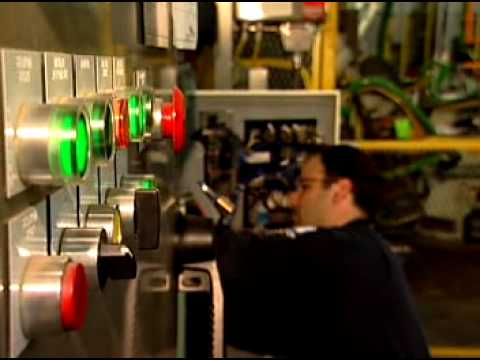
Photo: Petty Officer 1st Class Amanda Gray (Public domain)
Job description
Much of the job is detective work: tracing whether a stalled robotic arm or automated line is failing because of a bad sensor, a burned-out servomotor, or a fault in the controller logic, then fixing it through hands-on repair or reprogramming. Technicians split their time between scheduled preventive maintenance and reactive troubleshooting when a line goes down, usually inside manufacturing plants or warehouses. Many develop a specialty around one brand of industrial robot or controller, and experienced technicians can move up into automation engineering or systems integration roles.
Pros
- Solid pay ceiling (up to $109,890) reachable through vocational training or an associate's degree
- Hands-on technical variety: mechanical, electrical, and software troubleshooting in one job
- Growing reliance on automation keeps demand for skilled robotics maintenance steady
Cons
- Slower than average projected job growth (1.1% over the next decade)
- Regular exposure to hazardous equipment, contaminants, and uncomfortable noise levels
- A relatively small number of positions nationwide (about 1,300), limiting geographic options
A typical day
The pager decides the morning: line 2's palletizing robot faulted overnight, and the technician reads the error log, finds a servo overtravel alarm, and traces it to a worn cable harness flexing at the same joint ten thousand times a day — replaced, re-zeroed, and running before the morning production meeting ends. Mid-shift is preventive maintenance on the weld cell: greasing axes, checking backup batteries, verifying tool-center-point calibration with a test pattern. The afternoon brings a minor reprogram — the product changed size, so pick positions shift — done at the teach pendant with the line supervisor watching the clock. Documentation closes every job, because the next fault's diagnosis starts with today's notes.
Tasks at the job
- Make repairs to robots or peripheral equipment, such as replacement of defective circuit boards, sensors, controllers, encoders, or servomotors.
- Troubleshoot robotic systems, using knowledge of microprocessors, programmable controllers, electronics, circuit analysis, mechanics, sensor or feedback systems, hydraulics, or pneumatics.
- Install, program, or repair programmable controllers, robot controllers, end-of-arm tools, or conveyors.
- Maintain service records of robotic equipment or automated production systems.
- Modify computer-controlled robot movements.
- Perform preventive or corrective maintenance on robotic systems or components.
Workplace & working conditions
Work happens indoors in a climate-controlled setting. Noise levels can be distracting or uncomfortable. The role involves regular exposure to hazardous equipment or conditions and contaminants, and standard protective equipment (gloves, safety glasses, and similar) is expected.
There's a regular, moderate amount of time pressure, and you're expected to exercise significant independent judgment day to day. Mistakes can have serious consequences, so accuracy matters a lot.
Education necessary or common
Vocational training, apprenticeship, or associate's degree
Licenses & certifications
- Mechatronics/industrial maintenance associate credentials
- FANUC certified robot operator/technician
- OSHA 10
- PMMI or Siemens mechatronics certifications
Career path
Related fields
Courses to take
- Electronics/Shop — the daily hands-on foundation
- Physics — motors, sensors, and pneumatics
- Computer Science basics — reading and tweaking robot programs
- Algebra II — coordinates and offsets
- Industrial Technology — PLCs and automation where offered
Clubs, activities & competitions
- FIRST Robotics or VEX — build, break, fix, repeat
- SkillsUSA — mechatronics and industrial motor control events
- Maker or electronics club
- A maintenance-adjacent part-time job
First steps you can take now
- Join a robotics team and volunteer for repair duty specifically
- Learn basic PLC concepts from free online simulators
- Look up mechatronics associate degree programs — employers hire straight from them
- Practice systematic troubleshooting: symptom, hypothesis, test, document