Photo: Mitch Barrie (CC BY-SA 2.0)
Job description
The job starts with assessing a client's space and habits, then sorting belongings into keep, donate, sell, or discard piles alongside the client, often guiding them through the emotionally difficult process of deciding what to let go of. From there, organizers design and install storage systems for closets, pantries, or offices, label everything, and coach clients on habits that keep the space organized after the project wraps. Most professional organizers run their own small business, sometimes specializing in a niche like home staging or move management, and the pace is set as much by a client's emotional readiness as by the project timeline.
Pros
- No formal degree required, a professional certification exists but isn't mandatory to start
- Tangible, visible results each project, seeing a space transform from cluttered to organized
- Flexible, project-based work that can be scaled up or down around a schedule
Cons
- Above-average hours, and sessions can run long when a project or client needs more time
- Physically demanding, with regular kneeling, bending, and lifting of boxes or furniture
- Sessions can turn emotionally charged when clutter is tied to loss, hoarding, or family conflict
A typical day
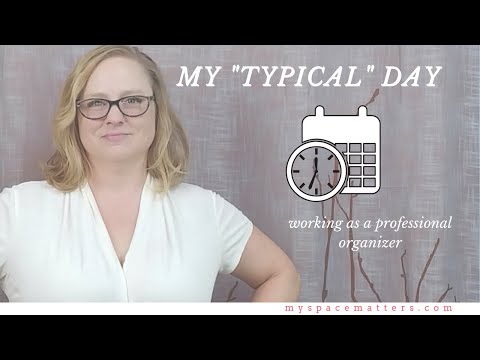
The first client session runs 9am to noon: a garage that hasn't parked a car in years. The organizer works alongside the client — everything touched, sorted into keep, donate, and toss — while managing the emotional weight, because a box of a late parent's things is not clutter, it's grief. Decisions made, the organizer designs the system: zones, shelving, labeled bins, and habits simple enough to survive real life. The afternoon holds a virtual consult with an overwhelmed home-office client, a donation drop-off, and the business side — invoicing, posting a before-and-after (with permission), and answering inquiries. Every job is part logistics, part psychology.
Tasks at the job
- Assess a client's space and belongings to identify clutter and workflow problems.
- Sort items into keep, donate, sell, or discard categories alongside the client.
- Design and install storage systems for closets, pantries, garages, or offices.
- Label containers and set up filing or routine systems clients can maintain themselves.
- Haul away or arrange donation pickup for discarded items.
- Coach clients on habits to keep a space organized after the project ends.
Workplace & working conditions
Work happens inside clients' homes or offices, often kneeling, bending, and lifting boxes or furniture for hours at a stretch.
The pace is set by the project timeline and the client's emotional readiness to part with belongings, so patience and tact matter as much as efficiency. Sessions can turn emotionally charged when clutter is tied to loss or hoarding.
Education necessary or common
No formal degree required; certification through a professional organizing association exists and helps with credibility
Licenses & certifications
- Certified Professional Organizer (CPO), after 1,500 paid hours
Related fields
Courses to take
- Psychology/AP Psychology — organizing is behavior change, not just tidying
- Business/Entrepreneurship — most organizers are self-employed
- Family & Consumer Sciences — home management fundamentals
- Art or Design — spatial planning and aesthetics
- Consumer Math — pricing, invoicing, and budgeting
Clubs, activities & competitions
- FCCLA — family and consumer sciences leadership
- DECA — entrepreneurship events
- Organize something real: the theater prop room, the equipment closet, a food pantry's stockroom
- A part-time job in retail — merchandising is organizing at commercial scale
First steps you can take now
- Reorganize one space completely this month and document the before/after and the system you built
- Offer free organizing sessions to two families to build a portfolio
- Read one organizing methodology book and note where you disagree with it
- Follow NAPO (National Association of Productivity & Organizing Professionals) resources