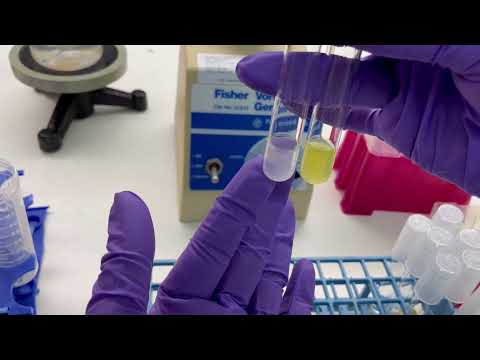
Photo: Eunice Laurent (CC BY-SA 4.0)
Job description
The work includes isolating and culturing microorganisms under controlled conditions, then examining their physiological and structural characteristics under a microscope to identify and classify them. Microbiologists test water, food, and environmental samples for harmful organisms, provide lab services to health departments and physicians for diagnosis and treatment, and use specialized equipment like electron microscopes and gas chromatographs. Some specialize in medical microbiology, studying the relationship between organisms and disease or how antibiotics affect them, and experienced microbiologists often move into supervising lab technicians and other scientists.
Pros
- Faster than average projected job growth (4.1% over the next decade)
- Pay can reach $150k, strong upside for a bachelor's-entry lab science role
- Access to specialized equipment (electron microscopes, thermocyclers) for hands-on scientific discovery
Cons
- Regular exposure to hazardous equipment and contaminants requires constant protective precautions
- Above-average hours, expect more than a standard 40-hour week
- Relatively small number of positions nationwide limits geographic flexibility
A typical day
The incubator gets opened first thing: overnight cultures either grew or they didn't, and today's plan depends on which. The morning goes to plating new samples under a biosafety hood — sterile technique so practiced it looks casual, though it never is — and running a Gram stain on a colony that doesn't match anything expected. Midday brings data: colony counts, growth curves entered and graphed, and a sequencing result to interpret. The afternoon might mean testing how a disinfectant performs against a resistant strain, then writing up methods while autoclaving the day's used cultures. Nothing leaves the lab alive that isn't supposed to.
Tasks at the job
- Isolate and maintain cultures of bacteria or other microorganisms in prescribed or developed media, controlling moisture, aeration, temperature, and nutrition.
- Provide laboratory services for health departments, community environmental health programs, and physicians needing information for diagnosis and treatment.
- Monitor and perform tests on water, food, and the environment to detect harmful microorganisms or to obtain information about sources of pollution, contamination, or infection.
- Examine physiological, morphological, and cultural characteristics, using microscope, to identify and classify microorganisms in human, water, and food specimens.
- Supervise biological technologists and technicians and other scientists.
- Use a variety of specialized equipment, such as electron microscopes, gas and high-pressure liquid chromatographs, electrophoresis units, thermocyclers, fluorescence-activated cell sorters, and phosphorimagers.
Workplace & working conditions
Work happens indoors in a climate-controlled setting. The role involves regular exposure to hazardous equipment or conditions and contaminants, and standard protective equipment (gloves, safety glasses, and similar) is expected.
The pace is often fast, with real time pressure to meet deadlines, and you're expected to exercise significant independent judgment day to day. Precision and accuracy are essential to the work.
Education necessary or common
Bachelor's degree
Common college majors
Career path
Related fields
Courses to take
- AP Biology — microbiology is its natural next chapter
- AP Chemistry — media, stains, and assays are chemistry in action
- AP Statistics — growth data and experimental controls demand statistical rigor
- Anatomy and Physiology — host-microbe interactions on the human side
- AP Computer Science Principles — bioinformatics touches most modern micro labs
Clubs, activities & competitions
- Science Olympiad — Disease Detectives and Microbe Mission events
- Science fair with a microbiology project (safe strains, proper supervision)
- Summer research program in a university biology lab
- HOSA-Future Health Professionals — biomedical events
First steps you can take now
- Do a supervised bacterial-growth experiment with your biology teacher — swab surfaces, culture, count
- Learn aseptic technique basics from lab-skills videos before you ever need them in college
- Read about one outbreak investigation (the CDC publishes them) and trace how microbiologists cracked it
- Email a university micro lab about volunteering or a summer program spot