Photo: US Army Africa from Vicenza, Italy (CC BY 2.0)
Job description
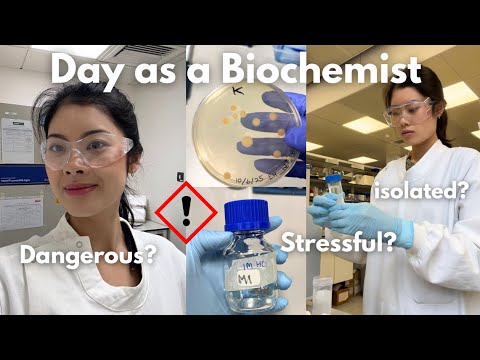
The work centers on planning and directing studies into disease, prevention methods, and treatments, developing new methodologies and instrumentation along the way and analyzing the resulting data. Medical scientists write up findings for scientific journals, apply for research grants to fund the next project, and often teach medical or laboratory procedures to physicians, residents, and students. Because the work involves handling toxic materials and hazardous equipment, strict safety procedures are part of daily practice, and the role typically requires a PhD in a life science field, sometimes paired with an MD.
Pros
- High upside earning potential, up to $178k at the top of the range
- Much faster than average projected job growth (8.7%)
- Research directly aimed at understanding and treating human disease, high real-world impact
Cons
- Above-average hours, more than a standard 40-hour work week
- Requires a PhD, sometimes combined with an MD, a long academic and research training path
- Regular exposure to hazardous materials requires strict safety procedures and protective equipment
A typical day
Morning starts at the bench, checking on cell cultures started last week and recording which treatment conditions changed how the cells grew. A few hours disappear into running an assay — pipetting across 96-well plates where one mislabeled row can void days of work. After lunch it's data analysis and a lab meeting, defending an interpretation of results in front of colleagues who are paid to poke holes in it. Late afternoon goes to the least glamorous, most important task: writing — a grant section, a methods paragraph, or notes detailed enough that someone else could repeat the experiment exactly.
Tasks at the job
- Follow strict safety procedures when handling toxic materials to avoid contamination.
- Plan and direct studies to investigate human or animal disease, preventive methods, and treatments for disease.
- Conduct research to develop methodologies, instrumentation, and procedures for medical application, analyzing data and presenting findings to the scientific audience and general public.
- Teach principles of medicine and medical and laboratory procedures to physicians, residents, students, and technicians.
- Write and publish articles in scientific journals.
- Write applications for research grants.
Workplace & working conditions
Work happens indoors in a climate-controlled setting. The role involves regular exposure to hazardous equipment or conditions, and standard protective equipment (gloves, safety glasses, and similar) is expected.
There's a regular, moderate amount of time pressure, and you're expected to exercise significant independent judgment day to day. Precision and accuracy are essential to the work. Almost all of the work is done as part of a team.
Education necessary or common
Doctor of Philosophy (PhD) in a life science field, sometimes combined with an MD
Common college majors
Career path
Related fields
Courses to take
- AP Biology — the direct foundation for disease research
- AP Chemistry — assays, buffers, and reactions are daily tools
- AP Statistics — experimental design and analysis decide whether results mean anything
- AP Calculus — required for the physics and modeling coursework ahead
- AP English Language and Composition — science careers are won and lost in writing
Clubs, activities & competitions
- Science fair with an original biology project (ISEF-affiliated fairs if possible)
- Science Olympiad — Disease Detectives, Anatomy, and lab events
- Summer research program at a university lab (many take high schoolers)
- HOSA-Future Health Professionals — the biomedical events track
First steps you can take now
- Email a local university lab whose work interests you and ask about volunteering or a summer spot — attach one paragraph on why their research specifically
- Design one real experiment with a control group, even a simple one, and write it up properly
- Read one open-access research paper on a disease you care about; look up every word you don't know
- Take a free online molecular biology course to preview the college material