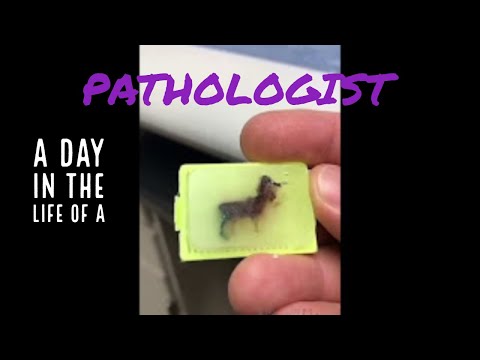
Photo: Bill Branson (Photographer) (Public domain)
Job description
Pathologists study samples using techniques ranging from gross pathology and histology to flow cytometry and molecular biology, working to pin down the exact cause and clinical significance of a disease. Findings get relayed directly to the surgeons and physicians treating the patient, so clear communication matters as much as the diagnosis itself. Many pathologists also teach, training medical students and lab professionals in specialties like cytotechnology or histotechnology, and some specialize further as medical examiners investigating cause of death.
Pros
- High upside earning potential, up to $450k at the top of the range
- Strong pay even at the entry level
- Primarily lab and desk-based work, less direct patient contact than most physician roles
Cons
- Above-average hours, more than a standard 40-hour work week
- A very small field nationally (around 400 projected openings), limiting geographic options
- Regular exposure to hazardous equipment and contaminants requires protective equipment
A typical day
The morning's frozen section is surgery in real time: a thyroid nodule arrives from the OR at 9:12, is frozen, cut, stained, and under the pathologist's microscope by 9:25 — and the call back to the surgeon ("follicular lesion, no capsular invasion on this sample") shapes what happens to the still-anesthetized patient. The day's signout stack holds forty cases: breast biopsies where the diagnosis changes a life in one line, a colon polyp series, and a lymph node that stops the pathologist cold — the architecture wrong, flow cytometry ordered, a lymphoma workup begun. Every slide is a patient the pathologist will never meet and serves absolutely. The multidisciplinary tumor board after lunch puts the pathologist's findings at the center of five treatment plans. The afternoon adds a resident teaching session at the double-headed scope, a molecular test interpreted, and the lab-director hat: quality metrics reviewed, a chemistry analyzer's validation signed. Medicine calls them the doctor's doctor; the diagnoses everyone else acts on start at this microscope.
Tasks at the job
- Examine microscopic samples to identify diseases or other abnormalities.
- Diagnose diseases or study medical conditions, using techniques such as gross pathology, histology, cytology, cytopathology, clinical chemistry, immunology, flow cytometry, or molecular biology.
- Communicate pathologic findings to surgeons or other physicians.
- Identify the etiology, pathogenesis, morphological change, and clinical significance of diseases.
- Read current literature, talk with colleagues, or participate in professional organizations or conferences to keep abreast of developments in pathology.
- Educate physicians, students, and other personnel in medical laboratory professions, such as medical technology, cytotechnology, or histotechnology.
Workplace & working conditions
Work happens indoors in a climate-controlled setting, and most of the day is spent sitting at a desk. The role involves regular exposure to hazardous equipment or conditions and contaminants, and standard protective equipment (gloves, safety glasses, and similar) is expected.
The pace is often fast, with real time pressure to meet deadlines, and you're expected to exercise significant independent judgment day to day. Mistakes can have serious consequences, so accuracy matters a lot, and the work is highly structured, following set procedures.
Education necessary or common
Doctor of Medicine (MD) or Doctor of Osteopathic Medicine (DO), plus residency training in the specialty
Common college majors
Licenses & certifications
- Medical license (MD/DO)
- American Board of Pathology certification
Career path
Related fields
Courses to take
- AP Biology — cell and tissue biology is the entire specialty
- AP Chemistry — lab medicine's chemical foundation
- Anatomy and Physiology — normal must be mastered before abnormal
- AP Statistics — diagnostic test performance is statistics
- Art or Photography — pattern recognition and visual memory are the working skills
Clubs, activities & competitions
- HOSA-Future Health Professionals
- Science Olympiad — Anatomy and Disease Detectives
- Microscopy as a hobby — a student scope and prepared slides build the eye
- Hospital lab volunteering or tours
First steps you can take now
- Get a student microscope and a prepared-slide set of normal tissues; learn to name what you see
- Ask a hospital lab about touring pathology during National Lab Week
- Read how a biopsy travels from OR to diagnosis
- Note the path: medical school, then pathology residency — a specialty for those who love diagnosis itself