Photo: Goleisureintl (CC BY 4.0)
Job description
A typical case involves chemically analyzing blood, urine, or spinal fluid, studying blood samples under a microscope to determine cell counts, blood type, or transfusion compatibility, and entering results into the medical record. Technologists double-check their own findings for accuracy and help run quality-assurance programs that keep an entire lab's results trustworthy, all under real time pressure since results can affect urgent treatment decisions. The role requires a bachelor's degree, involves close teamwork and occasional contact with frustrated patients or families, and experienced technologists often move into training or supervising lab staff.
Pros
- Requires a bachelor's degree, a defined path into skilled diagnostic work
- Standard full-time-range hours (40-45/week) rather than unpredictable shifts
- Technical, hands-on work with real diagnostic responsibility
Cons
- Fast-paced, deadline-driven environment where mistakes affect patient care
- Highly structured, procedure-bound work with limited room to deviate
- Regular exposure to hazardous lab equipment, contaminants, and biological specimens
A typical day
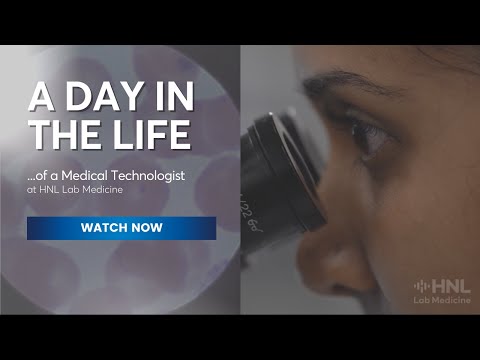
The day opens with instrument calibration and a review of overnight flags — any result the analyzers couldn't confidently report gets human eyes first. Mid-morning might mean cross-matching blood units for a scheduled surgery, work where a mistake is never acceptable. There's a microscope session after lunch, reading a blood smear where the cell shapes suggest something the automated counter can't name. Between runs, the technologist validates a new test protocol and signs off on a technician's quality-control data, since complex judgment calls stop at this desk.
Tasks at the job
- Conduct chemical analysis of body fluids, including blood, urine, or spinal fluid, to determine presence of normal or abnormal components.
- Analyze laboratory findings to check the accuracy of the results.
- Collect and study blood samples to determine the number of cells, their morphology, or their blood group, blood type, or compatibility for transfusion purposes, using microscopic techniques.
- Enter data from analysis of medical tests or clinical results into computer for storage.
- Establish or monitor quality assurance programs or activities to ensure the accuracy of laboratory results.
- Set up, clean, and maintain laboratory equipment.
Workplace & working conditions
Work happens indoors in a climate-controlled setting, and you work in close physical proximity to coworkers or the public for much of the shift. The role involves regular exposure to hazardous equipment or conditions and contaminants, and standard protective equipment (gloves, safety glasses, and similar) is expected.
The pace is often fast, with real time pressure to meet deadlines, and you're expected to exercise significant independent judgment day to day. Mistakes can have serious consequences, so accuracy matters a lot, and the work is highly structured, following set procedures. You'll regularly deal with frustrated or upset people as part of the job, and almost all of the work is done as part of a team.
Education necessary or common
Bachelor's degree
Common college majors
Licenses & certifications
- ASCP Medical Laboratory Scientist, MLS(ASCP) certification
- State laboratory personnel license (required in some states)
Career path
Related fields
Courses to take
- AP Biology — hematology, immunology, and microbiology all build on it
- AP Chemistry — analyzers are chemistry instruments; understanding reactions is the job
- Anatomy and Physiology — connecting lab values to what's happening in the body
- AP Statistics — quality control and method validation are statistical work
- Microbiology or Biotechnology electives if your school offers them
Clubs, activities & competitions
- HOSA-Future Health Professionals — Medical Lab Assisting and Biomedical Laboratory Science events
- Science Olympiad — Disease Detectives and lab-based events
- Summer research or lab-assistant program at a local university or hospital
- Blood drive volunteering — see the blood-banking side of the field up close
First steps you can take now
- Shadow a medical laboratory scientist for a day — call the lab manager at a nearby hospital and ask
- Look up NAACLS-accredited Medical Laboratory Science bachelor's programs and their prerequisites
- Do a microscopy project: buy prepared blood-smear slides and learn to identify cell types
- Ask a biology teacher to supervise a bacterial-culture project (safe strains) with proper controls