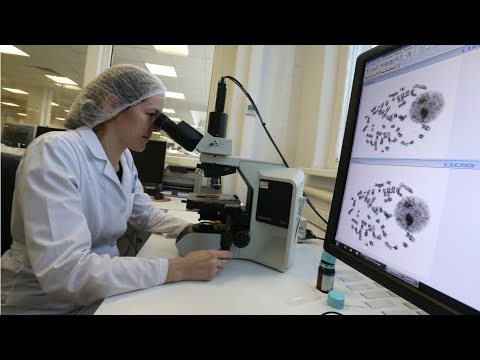
Photo: CDC Global (CC BY 2.0)
Job description
Much of the work is data-driven: overseeing public health surveillance systems, running statistical analyses, and monitoring and reporting infectious disease incidents to local and state health agencies. Epidemiologists also spend real time on communication, educating healthcare workers and the public about disease transmission and prevention, and presenting research findings to the policymakers who set health strategy. Precision matters enormously since conclusions about disease spread directly shape public health decisions, and nearly all the work happens as part of a larger team. A Master of Public Health is the standard credential, though a PhD is common for research leadership roles, and the field is projected to grow considerably faster than average, over 16%, reflecting rising demand for public health expertise.
Pros
- Much faster than average projected job growth (16.2%), among the strongest outlooks in public health
- Meaningful public health impact, tracking and helping prevent disease outbreaks
- An MPH is the standard credential, a shorter graduate path than many research-science careers
Cons
- Above-average hours, often exceeding a standard 40-hour work week
- A relatively small number of positions nationwide (800) despite the strong growth rate
- Work can involve responding to active disease outbreaks, bringing real time pressure and public scrutiny
A typical day
The day starts with surveillance data: scanning case counts across the county and noticing a salmonella cluster forming around one zip code. By mid-morning the epidemiologist is designing the investigation — a questionnaire for cases, a case-control comparison, calls to the environmental health team about restaurant inspections. The afternoon is analysis in R, calculating odds ratios that point to a single catering company, then a careful briefing memo for the health director. Not every day has an outbreak; many are spent on the quieter work of cleaning data, maintaining surveillance systems, and writing up studies that shape policy years later.
Tasks at the job
- Communicate research findings on various types of diseases to health practitioners, policy makers, and the public.
- Oversee public health programs, including statistical analysis, health care planning, surveillance systems, and public health improvement.
- Investigate diseases or parasites to determine cause and risk factors, progress, life cycle, or mode of transmission.
- Educate healthcare workers, patients, and the public about infectious and communicable diseases, including disease transmission and prevention.
- Monitor and report incidents of infectious diseases to local and state health agencies.
- Plan and direct studies to investigate human or animal disease, preventive methods, and treatments for disease.
Workplace & working conditions
Work happens indoors in a climate-controlled setting, and most of the day is spent sitting at a desk.
There's a regular, moderate amount of time pressure, and you're expected to exercise significant independent judgment day to day. Precision and accuracy are essential to the work, and the work is highly structured, following set procedures. Almost all of the work is done as part of a team.
Education necessary or common
Master of Public Health (MPH) is the standard credential; a PhD is common for research leadership roles
Common college majors
Licenses & certifications
- MPH (the standard credential)
- Certified in Public Health (CPH) optionally
Career path
Related fields
Courses to take
- AP Statistics — epidemiology is applied statistics about health
- AP Biology — pathogens, immunity, and disease mechanisms
- AP Calculus — required for graduate-level methods
- AP Computer Science Principles — modern epi lives in R and Python
- AP Psychology — behavior drives exposure and prevention
Clubs, activities & competitions
- HOSA (Future Health Professionals) — has public health-relevant events
- Science Olympiad Disease Detectives event — literally epidemiology practice
- Math or statistics club
- Volunteering with a health department or vaccination clinic
First steps you can take now
- Compete in Science Olympiad's Disease Detectives event or work its practice materials solo
- Take the CDC's free introductory epidemiology self-study course
- Trace a historical outbreak (John Snow's cholera map is the classic) and re-analyze it
- Interview an epidemiologist at your county health department