Photo: BLM Oregon & Washington (CC BY 2.0)
Job description
Before launching, guides brief the group on safety commands, paddling technique, and what to do if someone's thrown from the raft, then inspect all the gear (rafts, paddles, helmets, and flotation devices) to make sure it's trip-ready. On the water, the job alternates between calm paddling stretches and short, intense bursts through rapids where the guide has to read the line downstream and react instantly if someone falls in or the raft flips. It's seasonal, weather-dependent work tied to a specific river's rafting season, and physically demanding since guides are wet and on their feet all day. Guides carry direct responsibility for everyone's safety in the raft, which makes swiftwater rescue skills as important as paddling ability.
Pros
- Low barrier to entry, guide training and swiftwater rescue certification rather than a college degree
- Active, outdoor work on the water that suits people who enjoy physical, hands-on jobs
- Built-in variety, alternating calm paddling stretches with intense whitewater decision-making
Cons
- Long, demanding hours are common during a physically demanding, all-day season
- Entry-level pay can be quite low, on the lower end even among outdoor guide roles
- Direct responsibility for the safety of everyone in the raft carries real physical risk
A typical day
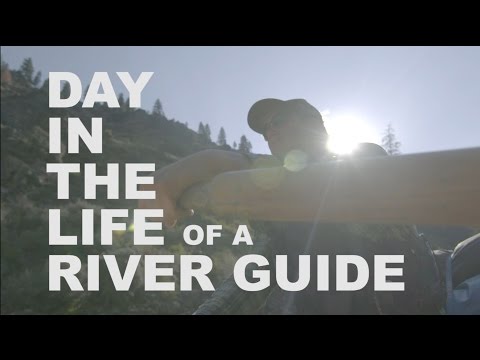
The day starts at the boathouse at 7am — checking rafts, pumps, throw bags, and first aid kits before guests arrive — then the safety talk, delivered with enough humor that people actually listen to the part about swimmer position. On the water, the guide reads the river constantly: today's flow is higher than yesterday's, which changes the line through the first big rapid, and the guide back-paddles the crew into position while calling strokes. Lunch is a riverside spread the guide packed and serves. The afternoon's excitement is a swimmer in a rapid — recovered in seconds because the setup was right — and the take-out means gear de-rigging, the shuttle, and trip stories that become tips.
Tasks at the job
- Read river conditions, water levels, and rapids to choose the safest line downstream.
- Instruct clients on paddling technique, safety commands, and what to do if thrown from the raft.
- Inspect and maintain rafts, paddles, helmets, and personal flotation equipment before each trip.
- Steer or direct the raft through rapids, adjusting for changing water levels and obstacles.
- Respond quickly to swimmers, flips, or equipment problems mid-river.
- Brief groups on safety procedures and river etiquette before launching.
Workplace & working conditions
Work happens outdoors on rivers, in and around cold water, sun, and rapidly changing weather.
The pace alternates between calm stretches of paddling and short, intense bursts through rapids where quick decisions matter, and guides carry direct responsibility for the safety of everyone in the raft. The season is often outdoor and weather-dependent, with physically demanding, wet, all-day work.
Education necessary or common
No formal degree required; swiftwater rescue certification and guide training through an outfitter are the standard credentials
Licenses & certifications
- Swiftwater Rescue certification
- Wilderness First Aid or WFR
- CPR
- State guide license (varies by state/river)
Career path
Related fields
Courses to take
- Physical Education & Swimming — strong swimming is non-negotiable
- Biology/Environmental Science — river ecology becomes your interpretive material
- Health — first aid foundations
- Speech — a guide is a performer and safety officer at once
- Geography/Earth Science — hydrology and weather reading
Clubs, activities & competitions
- Swim team or water polo — water confidence under stress
- Outdoor/adventure club — trip experience
- Scouting (BSA/Venturing) — camping and leadership
- Lifeguarding at a pool or beach
First steps you can take now
- Become a strong swimmer now — join swim team or train seriously
- Get lifeguard and CPR certified this season
- Take a commercial rafting trip and watch the guide's job, not just the rapids
- Look up outfitters' guide schools — many train and hire at 18 for summer seasons