Photo: Unknown authorUnknown author (CC BY-SA 4.0)
Job description
A performer might work trapeze, contortion, juggling, or wire-walking as part of a scripted show, but the visible performance is only part of the job: daily conditioning maintains the strength and flexibility the act requires, and repeated rehearsal with partners, riggers, and safety crews perfects the timing of every transition. Performers also inspect their own equipment and rigging before each show and adapt routines on the spot for a different venue, an equipment issue, or an injured partner. The margin for error is small (a mistimed catch can cause serious injury), so the work demands intense focus and trust in castmates, plus a touring lifestyle with constant travel and little routine. Most performers train for years in a specific discipline, often starting in childhood, rather than pursuing a formal degree.
Pros
- No formal degree required; specialty training substitutes for a traditional credential
- Pay can reach $100k for performers in major touring or resident shows
- Highly specialized skill that's rare and hard to replace once mastered
Cons
- Entry-level pay can be quite low
- Real physical risk, since a mistimed catch or slip can cause serious injury
- Touring life means constant travel with little routine outside the show schedule
A typical day
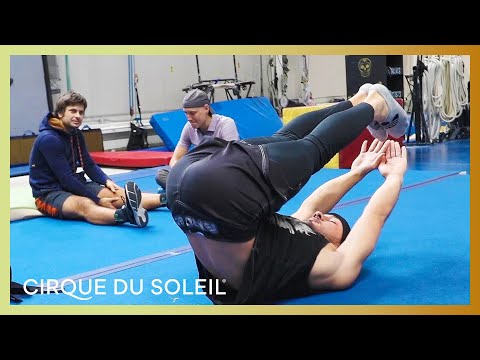
Training starts mid-morning: conditioning first — handstands, core work, flexibility — because strength maintenance is non-negotiable when your act is thirty feet up. Then discipline-specific practice: an aerialist drills the same drop until the timing is automatic, while a rigger double-checks every carabiner and swivel on the apparatus. Show days compress everything — warm-up, makeup and costume, an equipment inspection you never skip, then seven minutes of performance that took years to build. Touring adds another layer: load-ins, unfamiliar rigging points, and finding a way to train in a new city every week.
Tasks at the job
- Perform aerial, acrobatic, or specialty acts such as trapeze, contortion, juggling, or wire-walking as part of a scripted show.
- Train and condition daily to maintain the strength, flexibility, and precision required for high-risk stunts.
- Rehearse routines repeatedly with partners, riggers, and safety crews to perfect timing and transitions.
- Inspect personal equipment, rigging, and safety nets before each performance.
- Travel between cities or venues on a touring schedule, often living out of a trailer or bus.
- Adapt routines on the fly to accommodate venue size, equipment issues, or an injured partner.
Workplace & working conditions
Performances happen under a big top, in an arena, or on a theater stage, frequently high above the ground on aerial rigging or in close physical contact with partners and animals.
The margin for error is small -- a mistimed catch or slip can cause serious injury -- so the work demands intense focus and trust in castmates. Touring life means constant travel and little routine outside the show schedule.
Education necessary or common
No formal degree required, though many train for years in a specific discipline (aerial, acrobatics, juggling) starting in childhood
Licenses & certifications
- Professional circus school training (e.g. ENC, NECCA)
- Aerial rigging safety courses
- CPR/First Aid
Related fields
Courses to take
- Physical Education/Weight Training — strength and conditioning are the foundation
- Dance — body awareness, lines, and performance quality
- Anatomy & Physiology — injury prevention is career preservation
- Theater — circus is performance, not just athletics
- Physics — understanding force and momentum matters when you're the projectile
Clubs, activities & competitions
- Gymnastics, diving, cheer, or competitive dance — the standard feeder sports
- Youth circus program or aerial arts studio classes
- Theater productions — stage presence counts as much as skill
- Rock climbing club — grip strength and comfort with heights and rigging
First steps you can take now
- Find a youth circus or aerial studio near you and take an intro class
- Start a daily conditioning habit: handstand practice, core work, and flexibility
- Learn to juggle three balls — it's free and teaches circus-style practice discipline
- Watch a professional circus show (live or filmed) and study one act's structure