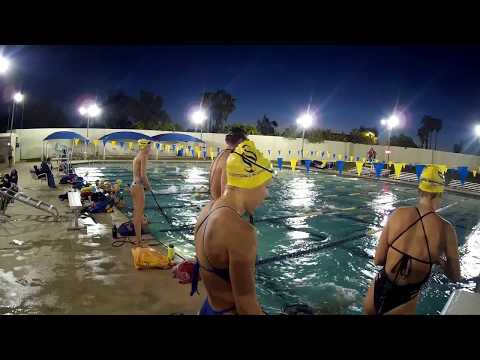
Photo: Phil Roeder from Des Moines, IA, USA (CC BY 2.0)
Job description
Designs and runs practices, teaches and refines stroke technique, and manages meet-day logistics and race strategy. Club-level coaching is often part-time or seasonal work, while college and elite-level coaching becomes a full career track with its own recruiting and administrative demands. The schedule tends to include early-morning and evening practices plus weekend meets, and coaches spend long hours on their feet staying attentive to swimmer safety around the water.
Pros
- Flexible entry point, club-level coaching needs no formal degree, just USA Swimming certification
- Direct, visible impact helping athletes improve technique and race times over a season
- Pay can reach $90k in full-time college or elite-level coaching roles
Cons
- Above-average hours are common, including early mornings, evenings, and weekend meets
- Entry-level pay can be quite low, especially in part-time or seasonal club coaching
- Long hours standing poolside in a loud, humid, chlorinated environment take a physical toll
A typical day
The alarm goes off for 5am practice, where two dozen teenagers swim before school and the coach has every lane's set written on the whiteboard. Deck work is constant motion: stopping a swimmer mid-set to fix a late breath, filming a start from the side, timing repeats and logging them against last month. The afternoon session adds the younger group -- more teaching, more chaos, more celebrating a first legal breaststroke kick. Evenings during championship season go to meet entries, lineup strategy, and messages to parents, because a club coach runs a small organization, not just a practice.
Tasks at the job
- Design practice sets targeting stroke technique, endurance, and race pace.
- Stand poolside observing swimmers' form and offering real-time correction.
- Time swimmers and track performance data to plan training and select competition lineups.
- Organize meet entries, relay lineups, and travel logistics for competitions.
- Teach starts, turns, and finishes to improve race times.
- Monitor swimmers for signs of overtraining, fatigue, or injury.
Workplace & working conditions
Work happens at a pool deck, which is loud, humid, and often chlorinated, with practices held year-round including early mornings before school.
The schedule frequently includes early-morning and evening practices plus weekend meets, and the pace turns intense and high-stakes during competition season. Coaches spend long hours on their feet and need to stay attentive to swimmer safety around water at all times.
Education necessary or common
No formal degree required for club-level coaching, though certification through USA Swimming is standard; school and college roles often expect a bachelor's degree
Licenses & certifications
- USA Swimming coach certification
- Lifeguard certification
- CPR/AED/First Aid
Career path
Related fields
Courses to take
- Anatomy & Physiology -- stroke mechanics live in the body
- AP Psychology -- motivation and confidence are coached daily
- Physical education -- training principles firsthand
- AP Statistics -- times, splits, and progression are data
- Business math -- club coaching involves rosters and budgets
Clubs, activities & competitions
- Swim competitively -- credibility and feel for the sport
- Get certified as a lifeguard and work the pool
- Assistant-coach or volunteer with a summer league team
- Teach swim lessons at a YMCA or rec center
First steps you can take now
- Get lifeguard and CPR certified -- it opens every pool door
- Volunteer with a summer-league or age-group team this season
- Study stroke technique video breakdowns and practice seeing one flaw at a time
- Look up USA Swimming's coach certification requirements