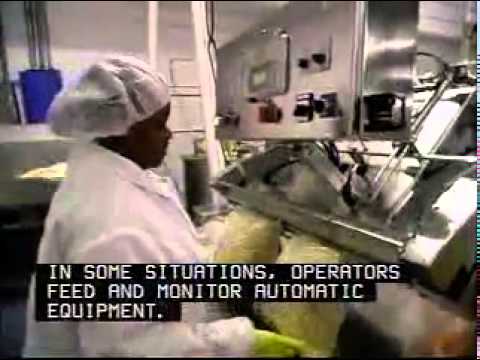
Photo: DimiTalen (CC0)
Job description
Operators start machines and monitor the production line for issues like pile-ups, jams, or glue that isn't sticking, stopping or resetting equipment and clearing jams when something goes wrong. Part of the job is quality control: inspecting output against standards and pulling defective products or packaging before they move further down the line. The work is fast-paced and precision-matters, done on your feet indoors, and includes roles like cannery workers packing food products.
Pros
- Faster than average projected job growth at 4.5%, with a large number of openings (45,300)
- Accessible entry with just a high school diploma and on-the-job training
- Climate-controlled indoor work environment across food, consumer goods, and industrial sectors
Cons
- Pay ceiling stays relatively modest, topping out around $60k
- Fast-paced, repetitive line work with real deadline pressure
- Regular exposure to hazardous equipment and noise from packaging machinery
A typical day
The line starts at 7am sharp, and the operator's first job is the changeover: last night ran 12-ounce bottles, today runs 20s, so guide rails move, filler heads adjust, and the labeler gets new stock, all verified with a test run before product flows. Once live, the work is vigilant rhythm — eyes cycling between the filler, the capper, and the date coder, catching a crooked label run before the case packer buries the evidence. Checkweigher data gets logged hourly; a drift toward underfill means a stop and an adjustment, because underfilled packages are a legal problem, not just a quality one. A jam mid-morning is cleared with the line locked out properly — no shortcuts around moving machinery, ever. The afternoon adds a sanitation cycle, a materials shortage negotiated with the warehouse, and end-of-shift counts. Thousands of packages left today; the operator's attention rode on every one.
Tasks at the job
- Stop or reset machines when malfunctions occur, clear machine jams, and report malfunctions to a supervisor.
- Observe machine operations to ensure quality and conformity of filled or packaged products to standards.
- Monitor the production line, watching for problems such as pile-ups, jams, or glue that isn't sticking properly.
- Inspect and remove defective products and packaging material.
- Start machine by engaging controls.
- Tend or operate machine that packages product.
Workplace & working conditions
Work happens indoors in a climate-controlled setting, and most of the day is spent on your feet. Noise levels can be distracting or uncomfortable. The role involves regular exposure to hazardous equipment or conditions and contaminants, and standard protective equipment (gloves, safety glasses, and similar) is expected.
The pace is often fast, with real time pressure to meet deadlines. Precision and accuracy are essential to the work.
Education necessary or common
High school diploma; some on-the-job training or apprenticeship
Licenses & certifications
- OSHA 10 (general industry)
- Food safety certification (for food/beverage plants)
- Forklift certification (often useful)
Career path
Related fields
Courses to take
- Machine Shop or Manufacturing CTE courses — mechanical aptitude for the line
- Algebra — rates, counts, and changeover math
- Chemistry — sanitation and product-handling basics
- Computer Applications — HMI screens and production logging
- Health — food-safety fundamentals for food and beverage plants
Clubs, activities & competitions
- SkillsUSA — manufacturing competitions
- FFA — food science and processing pathways
- Part-time work in fast food or grocery — pace, sanitation, and stamina
- FIRST Robotics — machine troubleshooting instincts
First steps you can take now
- Tour a bottling or food plant if one near you offers visits — packaging lines are mesmerizing in person
- Earn OSHA 10 general industry online
- Get a food handler's card if food plants operate nearby
- Ask a plant's HR about starting pay, shifts, and how operators move up to technician roles