Photo: MARIUS-FFB (CC BY-SA 4.0)
Job description
A single work order might mean measuring worn parts with precision instruments, trimming and bonding a replacement body section, or tracing a hydraulic fault back to its source, all under regulations that dictate exactly how the inspection and repair get documented. Every job closes with detailed repair logs, since airframes get re-inspected repeatedly over their service life and any past work has to be traceable. Technicians often start on routine inspections and progress toward more specialized work like avionics, engines, or structural repair, with additional certifications marking that progression.
Pros
- Faster than average projected growth at 4% with a solid 11,300 positions nationwide
- Entry through vocational training or apprenticeship rather than a four-year degree
- Top pay clears $128k, well above typical for a trade requiring no bachelor's degree
Cons
- Regular exposure to hazardous equipment, heights, and noise, with protective gear a daily requirement
- Mistakes carry serious safety consequences, so accuracy is non-negotiable under real time pressure
- Physically demanding work spent mostly on your feet, often in spaces without climate control
A typical day
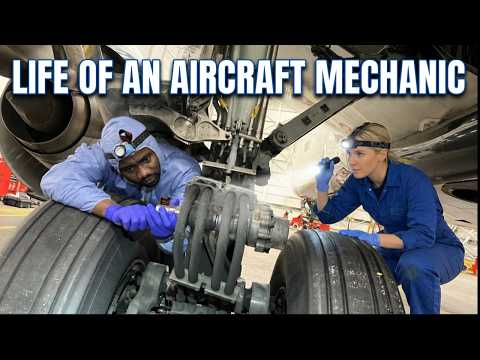
The shift starts at the toolbox with a work card: today it's a scheduled inspection on a regional jet — panels off, flashlight and mirror into the wheel wells, looking for cracks, chafed lines, and corrosion that the untrained eye would miss. Mid-morning a write-up comes in from a pilot: a pressurization fault, which means systematic troubleshooting with wiring diagrams and maintenance manuals, not guesswork. Every part replaced gets logged, torqued to spec, and signed for — the signature is a legal act. The day might end running engines on a test stand to verify the fix before the aircraft returns to the line.
Tasks at the job
- Conduct routine and special inspections as required by regulations.
- Measure parts for wear, using precision instruments.
- Trim and shape replacement body sections to specified sizes and fits and secure sections in place, using adhesives, hand tools, and power tools.
- Clean, strip, prime, and sand structural surfaces and materials to prepare them for bonding.
- Maintain repair logs, documenting all preventive and corrective aircraft maintenance.
- Inspect airframes for wear or other defects.
Workplace & working conditions
Work happens indoors, though not always in a climate-controlled space, and most of the day is spent on your feet. Noise levels can be distracting or uncomfortable. The role involves regular exposure to hazardous equipment or conditions and contaminants and working at heights, and specialized protective equipment is standard.
The pace is often fast, with real time pressure to meet deadlines, and you're expected to exercise significant independent judgment day to day. Mistakes can have serious consequences, so accuracy matters a lot.
Education necessary or common
Vocational training, apprenticeship, or associate's degree
Common college majors
Licenses & certifications
- FAA Airframe & Powerplant (A&P) certificate — the defining credential
- FCC license (helpful for avionics work)
- Inspection Authorization (IA, later-career)
Career path
Related fields
Courses to take
- Auto Shop or Aviation Maintenance courses — wrench time is the foundation
- Physics — systems from hydraulics to electricity
- Algebra II — manuals, tolerances, and electrical math
- English — maintenance-record writing is precise and legally binding
- Electronics if offered
Clubs, activities & competitions
- SkillsUSA — aviation maintenance competitions exist
- Civil Air Patrol
- EAA young Eagles / local airport volunteering
- Rebuild something: an engine, a motorcycle, an old machine
First steps you can take now
- Visit a local airport's maintenance shop and ask an A&P mechanic for a look at their day
- Locate the nearest FAA Part 147 aviation maintenance school and its admission requirements
- Do a real repair this month — brakes on a bike, a lawnmower carb — and document it like a logbook entry
- Attend an EAA chapter meeting; homebuilt-aircraft people love teaching students