Photo: Staff Sgt. Shelby Pruitt-Johnson (Public domain)
Job description
Clerks distribute production schedules and work orders, review documents to figure out material and staffing needs, and arrange delivery of supplies and parts to keep everything moving on time. When something disrupts the plan, a design change, a shortage, a backlog, they revise the schedule in coordination with management, sales, and engineering, and compile reports on progress, inventory, and costs along the way. It's a deadline-driven, team-based role that runs on precision, since a missed material order can stall an entire production line.
Pros
- Low barrier to entry with just a high school diploma and on-the-job training
- Large number of positions nationwide (34,100) across many manufacturing industries
- Central, coordinating role working across departments rather than an isolated task
Cons
- Above-average hours, more than a standard 40-hour work week
- Job growth projected to shrink slightly (-1.8%) over the next decade
- Fast-paced deadlines and constant schedule revisions due to shortages or backlogs
A typical day
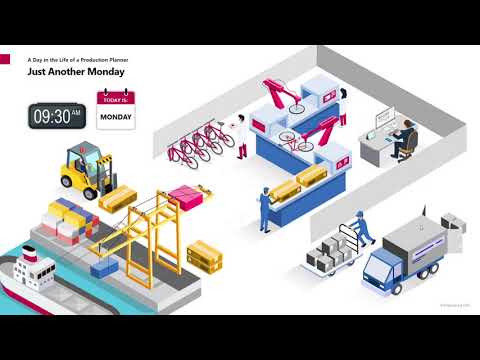
The 7am production meeting is the day's anchor: which orders ship this week, which are at risk, and why line 3 is behind. The clerk leaves with a list and spends the morning working it — calling a supplier about a late component, re-sequencing tomorrow's work orders so a hot customer job jumps the queue, and updating the schedule board everyone else plans around. After lunch a machine breakdown forces a re-plan: the clerk recalculates what the week can still deliver and warns sales before the customer calls first. The day ends syncing the system to reality — completed quantities logged, tomorrow's packets printed and staged.
Tasks at the job
- Distribute production schedules or work orders to departments.
- Review documents, such as production schedules, work orders, or staffing tables, to determine personnel or materials requirements or material priorities.
- Arrange for delivery, assembly, or distribution of supplies or parts to expedite flow of materials and meet production schedules.
- Requisition and maintain inventories of materials or supplies necessary to meet production demands.
- Confer with department supervisors or other personnel to assess progress and discuss needed changes.
- Revise production schedules when required due to design changes, labor or material shortages, backlogs, or other interruptions, collaborating with management, marketing, sales, production, or engineering.
Workplace & working conditions
Work happens indoors in a climate-controlled setting, and most of the day is spent sitting at a desk. Noise levels can be distracting or uncomfortable. Standard safety equipment like gloves or safety glasses is commonly worn.
The pace is often fast, with real time pressure to meet deadlines, and you're expected to exercise significant independent judgment day to day. Precision and accuracy are essential to the work, and the work is highly structured, following set procedures. You'll regularly deal with frustrated or upset people as part of the job, and almost all of the work is done as part of a team.
Education necessary or common
High school diploma; some on-the-job training or apprenticeship
Licenses & certifications
- APICS/ASCM CPIM (later in career)
Career path
Related fields
Courses to take
- Consumer Math/Algebra — scheduling and capacity math
- Computer Applications — Excel and ERP systems are the desk
- Business — how orders, inventory, and production interlock
- English — the job is half communication and coordination
Clubs, activities & competitions
- FBLA or DECA
- Stage manager for school theater — literal production scheduling and expediting
- Managing logistics for any team or event
First steps you can take now
- Stage-manage a school production or event — it is this job in miniature
- Master spreadsheet basics: sorting, filtering, conditional formatting, simple formulas
- Take a free intro to supply chain or operations course
- Ask a local manufacturer if you can shadow their planning office for a day