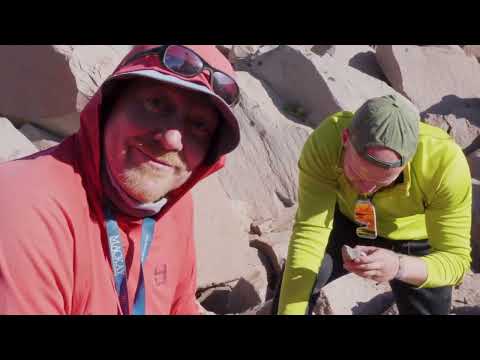
Photo: MONUSCO/Abel Kavanagh (CC BY-SA 2.0)
Job description
The job splits between rugged fieldwork, hiking into active crater zones in gas masks or heat-resistant suits to collect rock, ash, and gas samples, and quieter stretches in a lab or observatory analyzing that data alongside seismographs and satellite readings. Volcanologists model how lava might flow and where hazards are greatest, then brief emergency officials and the public on evacuation planning. It's a small, specialized corner of geoscience, often based at agencies like the USGS, where research-paced calm can turn into split-second, high-stakes judgment the moment a volcano stirs.
Pros
- Directly contributes to public safety by helping issue eruption warnings
- Pay reaches $110k, strong for a specialized geoscience field
- Research pace between field campaigns is often unhurried and self-directed
Cons
- Fieldwork involves genuine physical danger near active vents and eruptions
- Requires hiking rugged, remote terrain in extreme heat and sulfurous gas
- A narrow, highly specialized subfield with a small number of positions
A typical day
The observatory morning starts with overnight data: seismometers on the volcano recorded a swarm of small quakes, and the pattern -- depth, frequency, migration -- gets scrutinized against the baseline before anyone uses the word "unrest." Midday is fieldwork when conditions allow: a helicopter drop near a fumarole to swap gas-sensor batteries and grab samples, with exposure time tracked and minimized. The afternoon holds a monitoring call with emergency managers who need probabilities translated into decisions ordinary people can act on. The day ends updating the hazard status log, where scientific caution and public safety must both be served.
Tasks at the job
- Monitor active volcanoes using seismographs, gas sensors, and satellite deformation data to track eruption risk.
- Collect rock, ash, and gas samples from volcanic sites, sometimes hiking into active crater zones.
- Model eruption behavior and lava flow paths to inform hazard maps and evacuation planning.
- Brief emergency management officials and the public on current eruption risk levels.
- Maintain and repair monitoring equipment installed on or near volcanic slopes.
Workplace & working conditions
Fieldwork involves hiking rugged, remote volcanic terrain in extreme heat, sulfurous gas, and unstable ground, sometimes requiring gas masks and heat-resistant suits near active vents. Between field campaigns, most work moves to a lab or observatory analyzing samples and data.
The work carries genuine physical danger during eruptions or fieldwork near active vents, and split-second judgment calls can affect public safety. Otherwise, the pace is research-driven and can be quite unhurried between volcanic events.
Education necessary or common
Bachelor's degree for entry-level roles; a master's or PhD, typically in geology, for independent research positions
Common college majors
Career path
Related fields
Courses to take
- Earth science and AP Environmental Science -- geology's front door
- AP Chemistry -- magma and gas chemistry drive eruptions
- AP Physics 1 -- seismic waves and heat flow
- AP Calculus -- required by every geoscience degree
- AP Statistics -- monitoring data is signal-versus-noise work
Clubs, activities & competitions
- Science Olympiad -- earth science events
- Rock and mineral collecting or geology club
- Science fair with an earth-science project
- Hiking or outdoor club -- field science lives outdoors
First steps you can take now
- Follow the USGS Volcano Hazards Program's public updates and learn to read them
- Visit any volcanic or geologic site within reach and read its story in the rocks
- Take a free online geology course
- Email a volcanology graduate student -- they answer curious high schoolers more often than you'd think