Photo: Joshua Duggan (CC BY-SA 2.0)
Job description
Geoscientists plan and run field studies, sample collections, and drilling or testing programs, then analyze the resulting data with computer software to piece together the Earth's crust's history through soils, minerals, rocks, and fossils. The field covers a wide range of specialties, including mineralogists, paleontologists, seismologists, and geodesists, and some geoscientists focus specifically on identifying risks for natural disasters like earthquakes, mudslides, or volcanic eruptions. Findings typically get compiled into geological maps, cross-sections, and reports used for land use, mineral extraction, or resource management decisions, and while a master's degree covers most industry roles, research positions generally require a PhD.
Pros
- Very high upside earning potential, with top pay reaching $200k
- Faster than average projected job growth at 3.2% over the next decade
- Varied work blending fieldwork, data analysis, and scientific research
Cons
- Requires a master's degree for industry roles and typically a PhD for research
- Above-average hours, often exceeding a standard 40-hour work week
- Only about 2,000 positions nationwide, a fairly specialized and limited field
A typical day
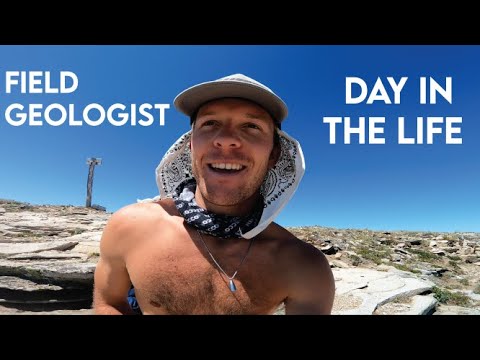
The morning is spent inside the earth without leaving the office: 3D seismic data on twin monitors, the geoscientist tracing a sandstone horizon fault by fault, building the structural map that will decide whether a well gets drilled. Midday brings the team review — a geophysicist's velocity model disagrees with the geologist's well picks, and an hour of friendly argument makes the interpretation better. The afternoon shifts to a field development plan: reserves recalculated, a well location nudged two hundred meters to dodge a fault. Field seasons still happen — outcrops measured, cores described — but most days the fieldwork is mental: reconstructing millions of years from data, then betting real money on the story.
Tasks at the job
- Plan or conduct geological, geochemical, or geophysical field studies or surveys, sample collection, or drilling and testing programs used to collect data for research or application.
- Analyze and interpret geological data, using computer software.
- Investigate the composition, structure, or history of the Earth's crust through the collection, examination, measurement, or classification of soils, minerals, rocks, or fossil remains.
- Analyze and interpret geological, geochemical, or geophysical information from sources, such as survey data, well logs, bore holes, or aerial photos.
- Identify risks for natural disasters, such as mudslides, earthquakes, or volcanic eruptions.
- Prepare geological maps, cross-sectional diagrams, charts, or reports concerning mineral extraction, land use, or resource management, using results of fieldwork or laboratory research.
Workplace & working conditions
Work happens indoors in a climate-controlled setting.
There's a regular, moderate amount of time pressure, and you're expected to exercise significant independent judgment day to day.
Education necessary or common
Master's degree is common for industry roles; a PhD is typical for research positions
Common college majors
Licenses & certifications
- Professional Geologist (PG) license in many states
- HAZWOPER for environmental site work
Career path
Related fields
Courses to take
- Earth Science/Geology — start with the planet itself
- AP Physics — seismology and geophysics
- AP Chemistry — mineralogy and geochemistry
- AP Calculus BC — quantitative geoscience is the employable kind
- AP Computer Science Principles — subsurface work is software work
Clubs, activities & competitions
- Science Olympiad earth science events
- A rock and mineral society membership
- Science fair with a geology project
- Hiking with a geology field guide — read landscapes on purpose
First steps you can take now
- Learn your region's geologic story from your state geological survey's free publications
- Build an identified rock collection
- Visit a natural history museum's geology wing with a notebook
- Note the credential reality: industry roles typically want a master's degree